


ILOILO City – Despite collecting P55.92 million in garbage fees, the Iloilo City Government continues to shoulder the bulk of its solid waste management expenses, with taxpayers still subsidizing 60 to 70 percent of the system’s total cost due largely to poor waste segregation, a city official said.
General Services Office (GSO) head Engr. Neil Ravena said the city doubled garbage fees in 2024 after a 2022 Cost of Service Analysis (COSA) conducted by the United States Agency for International Development (USAID) revealed that the local government collected only P55.92 million in garbage fees while spending more than P365.65 million on waste management, forcing it to subsidize 84 percent of the total cost at the time.
“Even after the increase in garbage fees, dako gihapon ang gina-subsidize sang syudad. Nagnubo na ini sa around 60 to 70 percent, pero mataas gihapon. Ang target naton is to bring the subsidy down to around 50 percent,” Ravena said.
He said reducing the city’s subsidy depends largely on improving waste segregation at the household level.
“Dapat kun may husto nga segregation, residual waste na lang ang dapat ginakolekta sang syudad. Pero ang natabo, wala sang segregation, amo nga nagasagol ang tanan nga klase sang basura,” he explained.
Waste segregation is the mandatory separation of solid waste at its source (homes, businesses, and institutions) into distinct categories. It is the cornerstone of Republic Act No. 9003, also known as the Ecological Solid Waste Management Act of 2000.
Under RA 9003, all generated waste must be separated into the following designated containers:
* Biodegradable / Compostable – Food waste, yard trimmings, and other organic matter that can be broken down naturally
* Recyclable – Paper, cardboard, glass, plastics, and metals that can be reprocessed into new products
* Non-Recyclable / Residual – Waste that cannot be composted or recycled, and must ultimately be sent to sanitary landfills
* Special Waste – Hazardous wastes such as old batteries, electronic devices (e-waste), paint, and expired medicines
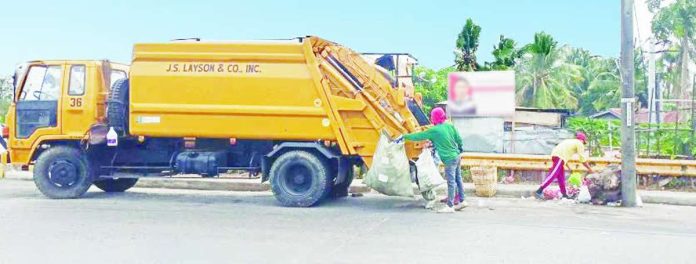
Ravena said the lack of proper segregation forces the city to collect about 490 tons of mixed waste daily, driving up hauling and disposal expenses.
“If everyone practices proper segregation, mabanas ang volume sang basura nga ginakolekta kag mabuhinan man ang gasto sang syudad. Indi lang ini responsibilidad sang gobyerno kundi sang tagsa ka panimalay kag establisyemento,” Ravena said.
He said the city government will continue intensifying its information campaign and strictly enforcing waste segregation policies to reduce garbage volume and make Iloilo City’s waste management system more financially sustainable./PN