



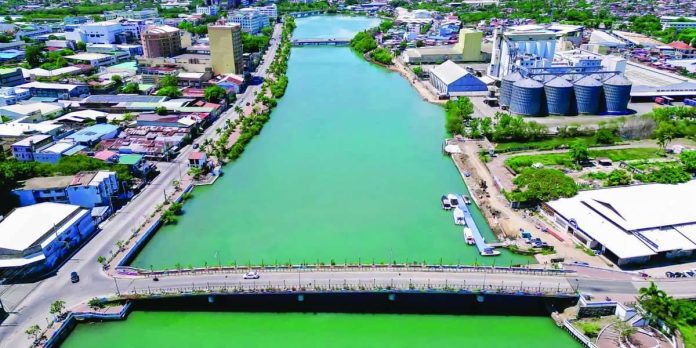
ILOILO City – The city government has ordered an investigation into the grease traps and sewage treatment facilities of hotels and restaurants along the Diversion Road after an oil-like substance contaminated a portion of the Iloilo River.
There are concerns over possible violations of environmental and wastewater management regulations that could jeopardize the health of the Iloilo River, recognized as the country’s most successful river rehabilitation project after the river’s ecological balance has been restored, with visible proof like the return of thriving fish populations and improved water quality.
The inspection will focus on establishments near the affected area after city personnel discovered grease-like waste covering about 300 meters of the river near the Iloilo Esplanade 4 during an initial assessment.
General Services Office (GSO) head Engineer Neil Ravena said an office order will be issued to formally launch the inspection and determine whether businesses are properly managing grease and wastewater.
“We will have an investigation…to check hotels and restaurants malapit sa Diversion Road, specifically ang ila sewage and treatment facilities,” Ravena said.
Initial findings indicate the contamination may have resulted from grease discharged into the city’s drainage system following declogging operations.
“Based sa initial investigation, may nag-declog kag gin-discharge sa drainage of Iloilo City,” he said.
Ravena explained that restaurants are required to install and maintain grease traps to prevent used cooking oil and grease from entering drainage systems, where they can solidify, clog pipelines, and eventually flow into rivers and other waterways.
“Mandatory gid nga may grease traps ang mga restaurants. Amo ini ang nagapugong nga ang mantika kag grasa indi makasulod sa drainage system. Kun wala sang proper maintenance, posible ini nga magbara sa drainage kag makalab-ot sa suba,” he said.
Although the grease is no longer visible on the river’s surface, Ravena said it may have been carried away by the current or consumed by fish.
He added that the incident could explain reports from residents who claimed that tilapia caught in the Iloilo River emitted an odor resembling cooking oil.
The city government said the investigation aims to determine whether any establishment violated environmental laws and wastewater management regulations while ensuring stricter compliance with proper grease disposal practices to prevent further contamination of the Iloilo River.
The Iloilo River is a thriving ecosystem. Its revival is a celebrated environmental success story, transforming a heavily polluted waterway into a vibrant ecological and recreational hub.
Alongside this environmental recovery, the city developed the Iloilo River Esplanade, which stretches 9.29 kilometers.
In the 1990s, the river was choked by pollution from informal settlers, fish pens, and untreated wastewater, turning it into a major environmental and public health hazard. To rescue the river, the local government established the Iloilo-Batiano River Development Council and implemented aggressive rehabilitation campaigns./PN