


ILOILO City – The Department of Agriculture – Bureau of Fisheries and Aquatic Resources (DA-BFAR) in Western Visayas has rolled out a comprehensive marine mammal monitoring and reporting initiative after the Philippines failed to secure a Comparability Finding from the United States’ National Oceanic and Atmospheric Administration (NOAA) Fisheries under the US Marine Mammal Protection Act, a development that could affect the country’s seafood exports.
The initiative took shape during a two-day workshop on July 16 and 17 led by BFAR regional director Remia Aparri, who also chairs the Blue Swimming Crab National Technical Working Group (BSC-NTWG).
The activity produced standardized monitoring and reporting forms designed to strengthen compliance, improve documentation, and reinforce the country’s case for continued access to the lucrative US seafood market.
The workshop gathered BFAR regional and provincial personnel, analysts from the National Stock Assessment Program (NSAP), and members of the BSC-NTWG Secretariat, who translated recommendations from earlier consultations in Negros Occidental and Guimaras into practical field monitoring tools.
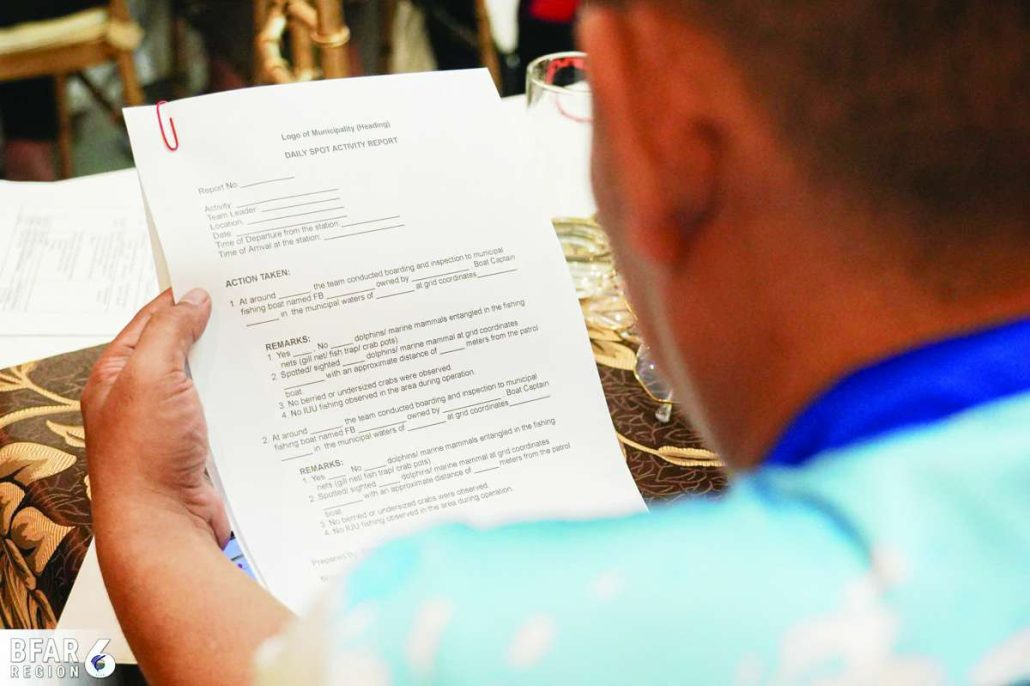
Facilitated by Atty. James Kho, the workshop produced four key monitoring forms: a Dockside Monitoring Form for data collection at fishing ports, a Bycatch Monitoring Form to document marine mammal interactions during fishing operations, a Marine Mammal Stranding Form for first responders, and a Daily Spot Report Form for enforcement officers monitoring fishing activities and regulatory compliance.
The standardized forms are set for immediate implementation by local government units, crab meat processors, crab fishers, and enforcement agencies to improve monitoring, reporting, and sustainable fisheries management.
Aparri stressed that accurate documentation is crucial in convincing US authorities that the Philippines is implementing effective measures to protect marine mammals.
“If we don’t document it, we cannot claim it, and NOAA will not accept it. These forms give our local government units, processors, and fishers a simple, consistent way to show the mitigating measures we are putting in place — and that documentation is what will make or break our case,” Aparri said.
The participants also developed tailored information, education, and communication (IEC) materials to help local governments, processors, and fishers better understand and adopt best practices in marine mammal protection.
In addition, the workshop initiated the mapping of an electronic catch documentation system that will enable traceability of seafood products from the point of catch to export, enhancing transparency throughout the supply chain and assuring international markets of the Philippines’ commitment to sustainable fishing practices.
Aparri said the newly developed tools would enable BFAR field offices to immediately begin consistent monitoring and reporting, a critical step in strengthening the country’s compliance with international fisheries standards while safeguarding marine biodiversity and protecting the livelihoods of coastal fishing communities./PN