



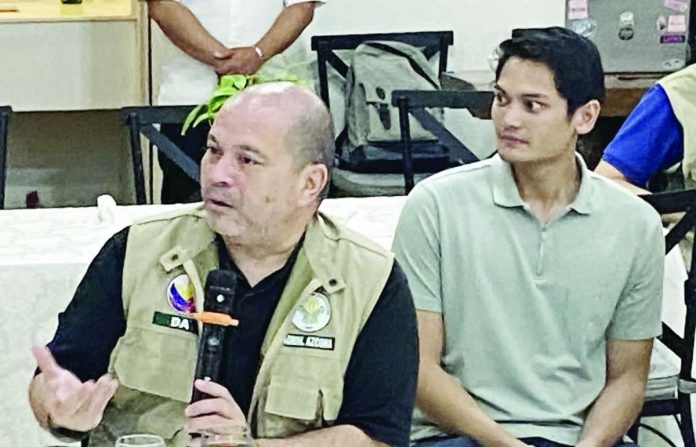
BACOLOD City – Agriculture Secretary Francisco “Kiko” Tiu Laurel Jr. expressed optimism that the United States will reopen its market to Philippine blue swimming crabs as the government moves to address deficiencies that led to the suspension of exports, while Negros Occidental Third District Rep. Javier Miguel Benitez pledged to push for the country’s reapplication.
Speaking during his visit to Negros Occidental on July 24, Laurel said he discussed the issue with U.S. Secretary of State Marco Rubio during the latter’s visit to Malacañang, where the possible reopening of the American market for Philippine blue swimming crab exports was among the topics raised.
“They are aware of it, and we were given the opportunity to reapply right away,” Laurel said, adding that the Philippines has until September to submit its appeal to U.S. authorities.
He expressed hope that approval would come before the end of the year, paving the way for the resumption of Philippine blue swimming crab exports.
Laurel said the Department of Agriculture has already issued guidelines to protect dolphins in coastal waters where blue swimming crabs are harvested, while an inter-agency task force has been formed to strengthen monitoring and enforcement.
He added that complementary ordinances from local government units would further bolster the country’s appeal by strengthening harvest monitoring and sustainability measures.
The agriculture chief made the remarks during a public hearing conducted by the Negros Occidental Sangguniang Panlalawigan on the proposed Negros Occidental Blue Swimming Crab Sustainability and Management Ordinance of 2026, which seeks to establish a provincewide system for sustainable harvesting, monitoring, documentation, and traceability of blue swimming crabs.
During the hearing, Benitez threw his full support behind the measure and vowed to champion in Congress the Philippines’ reapplication to the U.S. market.
“When the crab industry hurts, my constituents hurt,” Benitez said.
The congressman said restoring access to the U.S. market is critical to protecting the livelihoods of thousands of fisherfolk and workers in Negros Occidental’s Third District, which includes E.B. Magalona, Silay City, Victorias City, and a crab processing plant in Talisay City.
The United States, which previously accounted for about 90 percent of Philippine blue swimming crab exports, suspended imports from the Philippines on June 11 after determining that the country lacked an effective harvest reporting and traceability system required under its seafood import regulations.
Since the suspension, farmgate prices of blue swimming crabs in E.B. Magalona have reportedly fallen from P250 to P110 per kilogram, while some crab-picking plants have ceased operations.
Benitez emphasized that the U.S. restrictions stemmed not from food safety concerns but from inadequate documentation and monitoring systems.
“The issue is the lack of a working system to report and monitor the harvest. This is a documentary problem that we can fix,” he said.
He said the proposed ordinance would establish the harvest reporting and monitoring mechanisms required by U.S. authorities, strengthen protection for berried crabs, institutionalize livelihood assistance for fisherfolk, and create a boat-to-market documentation system that complies with international traceability standards.
The lawmaker also proposed adopting a uniform minimum catch size, establishing a legally enforceable closed season in coordination with local government units, implementing fishing gear regulations under national law, and creating a fully funded trust fund to support the industry’s sustainability.
Benitez likewise committed to pushing for adequate funding for fisheries programs, supporting amendments to the Fisheries Code, and ensuring the country’s reapplication to the U.S. market is promptly filed and closely monitored until export access is restored./PN