
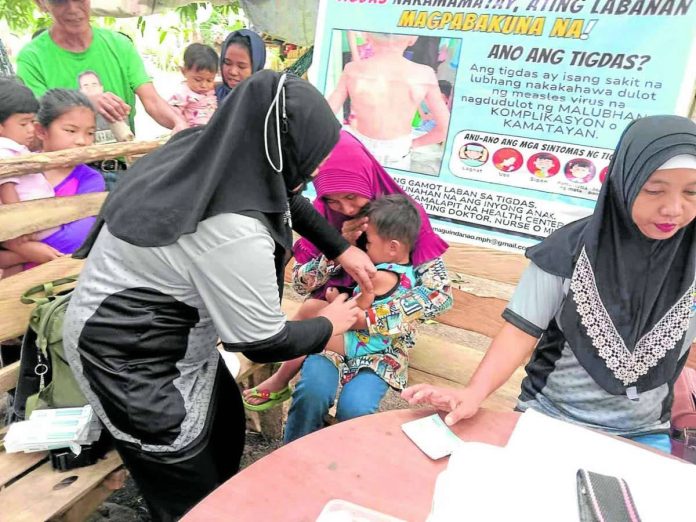
MANILA — Barangay health workers (BHWs) urged the government to prioritize the passage of a law that would institutionalize their long-standing calls for fair compensation, benefits and legal protection.
In a statement, the National Confederation of Barangay Health Workers of the Philippines and the UNI Global Union–Philippine Liaison Council (UNI-PLC) said they sent a joint appeal to President Marcos calling for the creation of a Magna Carta.
Both groups urged the President to reinstate the bill as a priority measure of the Legislative-Executive Development Advisory Council (Ledac) and certify it as urgent.
“For over four decades, across multiple administrations, we have been repeatedly promised a law that ensures just recognition, adequate benefits and social protection. Many of our colleagues have already retired or passed away without ever seeing those protections,” they said.
“We are praying that President Marcos Jr. will be the leader who finally brings this 40-year struggle to a close,” they added.
Senate version
The Senate recently unanimously approved on third reading a bill creating the Magna Carta of Barangay Health Workers (BHWs).
Senate Bill No. 1905, or an Act Providing for the Magna Carta of Barangay Health Workers, aims to protect and empower the role of barangay health workers in providing primary healthcare.
The National Confederation of Barangay Health Workers of the Philippines and the UNI Global Union–Philippine Liaison Council noted that the country’s BHWs, which total around 277,000, serve as the front-line providers of public health programs, including those implemented during the COVID-19 pandemic.
But despite their important role in the community, they continue to struggle from the lack of standard financial compensation and social protections.
“Our community health workers are the literal backbone of the primary health-care system in every single barangay, yet they remain the most vulnerable and under-protected,” said UNI-PLC president Roland de la Cruz. (Gillian Villanueva © Philippine Daily Inquirer)