

[av_one_full first min_height=” vertical_alignment=” space=” custom_margin=” margin=’0px’ padding=’0px’ border=” border_color=” radius=’0px’ background_color=” src=” background_position=’top left’ background_repeat=’no-repeat’ animation=”]
[av_heading heading=’CIDG TO REOPEN 3 ‘COLD CASES’’ tag=’h3′ style=’blockquote modern-quote’ size=” subheading_active=’subheading_below’ subheading_size=’15’ padding=’10’ color=” custom_font=”]
BY RUBY P. SILUBRICO
[/av_heading]
[av_textblock size=” font_color=” color=”]
ILOILO City – The Criminal Investigation and Detection Group (CIDG) in Region 6 will reinvestigate crimes that have not yet been fully solved, including three high-profile ones.
The three were the unsolved assassinations of businessman Jimmy Punsalan; Superintendent Musa Amiyong, former intelligence chief of the city police; and Romeo Capalla, a former rebel and brother of the Ilonggo archbishop emeritus of Davao, Fernando Capalla.
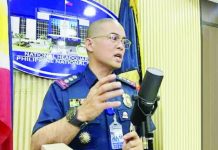
According to Senior Superintendent Marlon Tayaba, newly installed chief of CIDG-6, his men were now reviewing the records of these cases.
“We hope to solve these heinous crimes,” he told Panay News.
CIDG will be scouting for new witnesses.
Punsalan, a restaurateur and former officer of the now defunct Philippine Constabulary, was peppered with bullets on Aug. 7, 2013 in Mandurriao district while Amiyong was shot on Nov. 22, 2013 in Lapuz district.
Capalla, on the other hand, was shot to death in front of the public market of Oton, Iloilo on March 15, 2014.
PUNSALAN CASE
Punsalan, a 61-year-old resident of Barangay Cubay, Jaro district, was gunned down around 9 p.m. inside his restaurant in Barangay Bolilao, Mandurriao. The killers, two armed men, left using a Toyota Fortuner with no plate number.
The assassins were between 25 to 30 years old and stood not higher than 5 feet and 5 inches, witnesses said.
Then city police director Senior Superintendent Ruperto Floro formed a special task force to investigate the killing but nothing happened.
Floro was quoted to have said that the killers appeared to be “professional.”
They likely placed Punsalan under surveillance for quite some time before finally deciding on the most opportune time to hit him, Floro said.
According to the Scene of the Crime Operatives, Punsalan was shot at close range.
Two years before the killing, Punsalan’s house was raided by the Regional Special Operations Group for allegedly operating illegal numbers games “daily double” and “first two.”
Punsalan’s wife Ma. Lissa would later complain to the Jaro police that eight armed men barged into her compound, poked guns at the household staff and took P500,000 in cash from her husband’s drawer.
AMIYONG CASE
Amiyong, 58, was shot by motorcycle-riding gunmen on Quirino Lopez Bridge in Lapuz. The attack was believed to be either drug-, business- or illegal gambling-related.
The retired police superintendent died on Nov. 26, 2013 or six days after he was shot.
A Panay News source linked the former intelligence chief of the Iloilo City Police Office to the illegal drug trade.
He may have adversely affected the business of a big-time drug pusher operating in the City Proper, said the source.
Amiyong died of two gunshot wounds on the neck at St. Paul’s Hospital Iloilo. A .45 pistol was used on him.
The source also said Amiyong dabbled into a shadowy financial business venture promising handsome returns to mostly local Muslim traders in La Paz district.
But for some reason, the investors began to get uneasy and wanted their investments – reportedly reaching to several millions of pesos – back, said the source.
Amiyong failed to produce the money, the source added.
In August 2008, Amiyong’s Mitsubishi Lancer car was “bombed” in Barangay West Habog-habog, Molo district.
Probers said an F26-A fragmentation grenade was used.
In August 2013, two motorcycle-riding armed men fired at Amiyong in Barangay Kasing-kasing, Molo. He was not hit.
Sometime in 2008, Amiyong was charged criminally – an offshoot of a police operation he personally led against two drug suspects on General Luna Street.
CAPALLA CASE
Capalla, a former New People’s Army rebel, was shot by two armed men. Sympathizers believed militias may have a hand in the killing.
At the time he was killed, Capalla was serving as director of Panay Fair Trade Center, a private firm that helped small farmers in Panay Island. It bought their agricultural products such as banana chips, muscovado (brown) sugar and ginger tea, and exported these to Europe and the United States.
Witnesses told investigators they saw two assassins onboard a motorcycle and two to three other motorcycle-riding men they believed to be the gunmen’s backup.
Human rights alliance Karapatan-Panay believed the killing was the culmination of the continued harassment on Capalla by the military.
Capalla was arrested at a joint police-military checkpoint in Barangay San Antonio, Oton in Aug. 3, 2005 around 6:30 a.m. for arson.
He was charged with allegedly ordering the burning of construction company EC De Luna’s asphalt batching plant in Barangay Particion, Guimbal town a year earlier, on May 12, 2004.
EC De Luna’s asphalt batching plant was allegedly set to fire by rebels after they refused to pay revolutionary tax.
Capalla denied the charge. He was eventually cleared by the court.
Capalla was charged with rebellion in the early 1980s but the case was dismissed in the early 1990s. He was allegedly the former commanding officer of the Corazon Chiva Waling-waling Command of the Panay Regional Party Committee of the NPA./PN
[/av_textblock]
[/av_one_full]