

ILOILO — The food is carefully prepared, a small portion set aside, and a place reserved for someone who will never again sit at the family table. In some Ilonggo households, the departed are never truly forgotten — not even at mealtime.
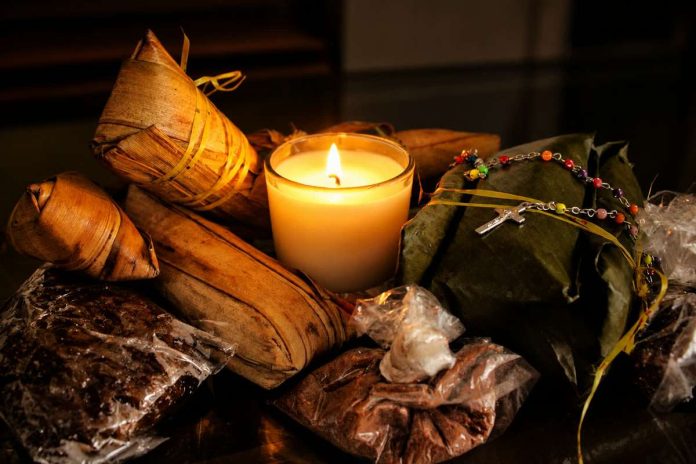
Every All Saints’ Day and All Souls’ Day, an age-old tradition quietly comes alive in some homes across Iloilo Province. Families place food on altars, beside beds, or in secluded corners of their houses, believing that the souls of their departed loved ones may return for a visit.
It is a curious custom, one that blends remembrance, superstition, spiritual beliefs, and an enduring attachment to family traditions passed down through generations.
While thousands of Ilonggos flock to cemeteries to light candles, offer flowers, and pray for the dead, others observe a more intimate ritual within their homes — preparing food not for the living, but for those who have gone before them.
And despite the passage of time, modernization, and changing religious practices, this tradition refuses to disappear.
A tradition inherited, not questioned
For 76-year-old Teresita Magbanua Paedon of Pototan, Iloilo, setting aside food for the departed is something she learned from her parents and has faithfully practiced throughout her life.
“Ginsunod ko man lang ran sa amon kamal-aman. Nagabutang kami sa altar ukon indi gani sa baid sang balay para ihalad sa mga patay,” Paedon recalled.
But the ritual comes with an unusual prohibition: children are forbidden from eating the food.
According to Paedon, the elders considered the offerings already touched by the presence of the departed, describing them as “mayami,” a term associated in their tradition with something dead-cold, uncanny or supernatural.
Only older family members were allowed to consume the food afterward.
Interestingly, Paedon does not necessarily believe that the souls of the dead actually return to partake of the offerings.
She has never personally experienced anything that would convince her of such a supernatural occurrence.
Yet she continues the practice.
“Wala man ako sang may nabatyagan ah pero como nga tradisyon na sang amon pamilya, ginahimu lang namon ina kada Piyesta Minatay. Waay man sang madula kon sundon mo,” she explained.
Her reasoning reveals an important dimension of the tradition: belief in the supernatural is not always necessary for a custom to survive.
Sometimes, the simple desire to preserve what one’s parents and grandparents practiced is reason enough.
When the food mysteriously diminishes
For Rosela Inventado of Tigbauan, Iloilo, however, the tradition carries a more mysterious dimension.
Growing up, she watched her mother place food on the altar or inside a room every Piyesta Minatay, continuing a practice inherited from earlier generations.
“Ginahalad namon para sa minatay. Sanday nanay gid sina ang nag-una, halin sang nagpangabuhi sia ginahimu na nila ina. Ginpanubli man nanda ran sa nanay nanda mo. Nagasabay lang ako kanday nanay kay didto abi ako naga-istar kanday nanay,” Inventado recounted.
What makes her experience particularly intriguing is her observation that the food sometimes appears to diminish after being left as an offering.
“Huod. May ara gid buhin, pero gamay lang man. Kis-a gani makahambal kaw nga basi kuti man ang nagakaon,” she said.
Inventado admitted that they could not determine what caused the food to diminish, sometimes wondering whether mice might have eaten a portion.
Nevertheless, the experience has become part of the mystery surrounding the family ritual.
Like Paedon’s family, Inventado’s household observed strict rules about the offerings.
Her mother prohibited the children from eating the food, warning that doing so could make them feel unwell or expose them to an encounter with a spirit.
Unlike Paedon, however, Inventado personally believes that departed relatives can return or make their presence felt, not only during Pista Minatay but even on ordinary days.
She associates these experiences with an unusual, uncanny breeze inside their house — a sensation she describes as “mayami.”
Whenever she experiences such a feeling, she visits the cemetery to pay her respects to departed relatives.
Whether these sensations have supernatural explanations remains unproven. But for Inventado, they reinforce a deeply personal connection with loved ones who are no longer physically present.
A room reserved for the unseen
In Barangay Igang, Pototan, Cheryl Mendoza remembers another variation of the same tradition.
Instead of placing food exclusively on an altar, her mother would leave offerings on a bed inside a room.
“Ginabutang nanda sa higdaan. Ti, ginasunod namon ran. Kang una ginapangadi-an na ran tapos indi kami makasulod,” Mendoza recalled.
The restriction added an atmosphere of mystery to an otherwise ordinary household space.
Mendoza continues the practice today, including the prohibition against children eating the offerings.
Although she acknowledges having no concrete evidence that the souls of the dead return during Pista Minatay, she believes departed relatives can still make their presence felt.
“Ti, kon magpabatyag sanda, makadto ka sa patyo kag magsindi ka kandila,” she said.
For Mendoza, lighting a candle at the cemetery becomes a response to what she interprets as a spiritual visitation.
Her experience illustrates how traditional beliefs can influence the ways families remember and maintain connections with the dead.
Love and family memory outlive death
The custom of offering food to departed relatives survives because it has become intertwined with family identity, childhood memories, and the desire to honor those who came before.
There is emotional significance in this practice. In a culture where remembering deceased loved ones remains an important part of family life, the simple act of setting aside food can become a gesture of affection that transcends generations.
As Iloilo observes another Piyesta Minatay, cemeteries will once again fill with visitors carrying candles, flowers, and prayers. But beyond the crowded graveyards, a quieter form of remembrance will unfold behind closed doors. It is about keeping alive something their parents and grandparents taught them — a tradition that continues to connect the living with the departed.
And therein lies the enduring beauty of this unusual Ilonggo custom. The food may be intended for those who have died, but the tradition ultimately nourishes something among the living: memory, belonging, and the enduring belief that death need not erase the bonds of family.
For in these households, even those who are gone still have a place at the table./PN