

BACOLOD City – The city government is intensifying the implementation of Republic Act 9003, or the Ecological Solid Waste Management Act, by strengthening household-level waste segregation and encouraging barangays to adopt stricter solid waste management measures.
City Administrator Atty. Mark Steven Mayo said the city is gradually expanding the implementation of the law in several barangays to address the growing volume of garbage generated daily.
Mayo made the statement following a public consultation on the Waste Analysis and Characterization Study (WACS) conducted by the city government in partnership with consultancy firm SGV on November 9 at the Bacolod City Government Center.
He emphasized that households account for a significant portion of the city’s waste generation, highlighting the need to strengthen waste segregation at source.
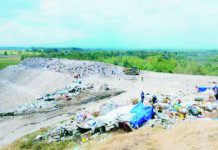
Based on the study, Bacolod generates approximately 1,800 to 2,000 cubic meters of garbage daily.
The consultation gathered representatives from various sectors to discuss waste characterization, pollution analysis, waste diversion targets, and strategies to improve the city’s solid waste management system.
SGV representatives Partner Katrina Francisco and Director Judd Tablazon presented the study’s methodology and possible scenarios for improving the city’s waste management programs.
During the discussion, barangay representatives shared their existing initiatives, including bokashi composting practiced by 10 households in one community and waste segregation efforts involving 15 to 21 households in Barangay 1.
Participants also recommended identifying model barangays for the Hapag Program and intensifying public information campaigns on proper waste disposal.
Meanwhile, Mayor Greg Gasataya stressed that addressing Bacolod’s garbage problem requires collective responsibility among residents, barangays, and the local government.
He noted that despite regular coastal cleanup activities, garbage continues to accumulate along waterways and coastal areas, underscoring the need to strengthen waste management efforts at the community level.
Gasataya explained that rivers carry garbage from inland communities toward coastal areas, particularly in Barangays Singcang-Airport and Banago.
To address this, the city has installed trash traps in strategic locations, including Bata and the Banago area, to prevent garbage from flowing into rivers and eventually reaching coastal waters.
The mayor emphasized that while coastal cleanup activities remain important, changing people’s attitudes and promoting individual responsibility are equally necessary.
He urged residents to stop throwing garbage into rivers and other waterways, stressing that proper waste disposal should be a shared responsibility.
Gasataya also cited the initiatives of the Bacolod Environment and Natural Resources Office (BENRO), including its collaboration with various organizations on biodiversity programs.
He likewise expressed support for Barangay Handumanan’s implementation of the “No Segregation, No Collection” policy, describing it as a practical approach to improving waste management through a pilot implementation.
He said starting with a pilot area would allow the city and barangays to assess the policy’s effectiveness, identify implementation challenges, and determine whether it could be replicated in other communities.
Several barangay captains have reportedly expressed willingness to adopt similar measures, he added.
Mayo, for his part, emphasized that the WACS should serve as a guide not only for the city government but also for the entire community in developing a more effective and sustainable solid waste management program.
The study will undergo further review and consultation before its findings and recommendations are submitted to the appropriate local bodies for consideration and approval.
The city government is encouraging stronger cooperation among barangays, households, and other stakeholders to ensure the effective implementation of RA 9003 and reduce the volume of waste reaching disposal facilities and waterways./PN