


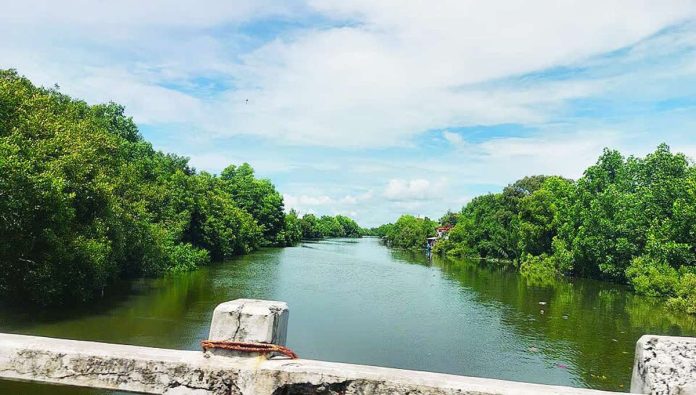
ILOILO City – A behavioral change program targeting improper waste disposal has slashed daily garbage recovered from areas along the Batiano River from as much as 760 kilograms to only 300 to 400 kilograms, prompting the city government to push for greater community responsibility in keeping waterways clean and reducing flood risks.
The improvement was recorded in 18 of Iloilo City’s 180 barangays currently covered by a behavioral change study, which seeks to determine whether changing residents’ waste-disposal habits can produce lasting results beyond government-led clean-up drives.
General Services Office (GSO) head Engr. Niel Ravena said the decline in garbage collected along the Batiano River demonstrates the potential impact of sustained community participation.
“If we could do 50 percent, there could be significant impact in clearing and we can say that social behavioral change is indeed significantly affecting them,” Ravena said.
The gains, however, come as other waterways continue to struggle with massive garbage accumulation.
Nearly 10 metric tons of garbage were recovered from the Jaro River in just two weeks, particularly in upstream portions of Jaro district. Around 980 kilograms, mostly plastics, were also collected from Dungon Creek, while approximately 910 kilograms were removed from La Paz Norte.
The figures underscore the scale of the city’s waste problem despite continuing clean-up operations.
Ravena warned that clearing waterways alone would not solve the problem if residents continued dumping garbage into rivers, creeks and drainage systems.
“There should be a social behavioral change in the barangays because they should be the primary ones that should be doing this. We do not want a mindset that they can just throw away garbage and there’s the city government cleaning everything after,” Ravena said.
“The community should participate in our clean-up drive and after the cleaning, they should maintain and own these areas,” he added.
The GSO has deployed information, education and communication teams to monitor barangays following clean-up operations and determine whether residents return to improper waste disposal practices.
Barangays that repeatedly fail to address waste management problems may have their concerns elevated to the Department of the Interior and Local Government (DILG), according to Ravena.
Of particular concern are households along waterways and creeks that have limited access to regular garbage collection.
Ravena estimated that around 3,000 informal settler households are situated along the Jaro and Batiano rivers.
“Their garbage trucks cannot reach them. The accessibility of collection is hard because they use footbridges and they are far, and it will be more convenient for them to dispose of waste by just throwing waste in their windows because it will take time for them to collect their waste and bring it at the collection point or the MRF of the barangays,” Ravena said.
“We need behavioral change in our informal settlers living in our waterways,” he added.
The GSO, Facility Conservation Office, City Environment and Natural Resources Office, City Engineer’s Office and other city offices are conducting simultaneous clean-up operations in Dungon Creek, La Paz Norte and the Jaro River.
Ravena expressed frustration after sacks of garbage were recovered from Dungon Creek, indicating that some waste apparently collected from households was later dumped directly into the waterway.
“Mostly plastics and medyo frustrating sa part namun because we were able to collect waste in sacks, which means this was disposed in the waterway after it was collected in their barangays or household,” he said.
Plastic waste accumulating in waterways and drainage systems is difficult to retrieve and could eventually reach the Iloilo River because Dungon Creek is connected to it.
The city is prioritizing waterways in areas where floodwaters rise rapidly but take longer to subside, particularly in La Paz and Jaro.
Clean-up operations are planned as a weekly activity, with GSO personnel fully deployed to the three priority sites.
“That is our approach now, that if we can have three to four offices conducting it, so that we can expedite and make efficient our activity,” Ravena said.
Barangay Cubay, located along the La Paz-Jaro boundary, remains a major problem area, with an estimated six to eight truckloads of garbage still needing removal.
Ravena said additional clean-up schedules and volunteer groups would be required because of the volume of accumulated waste and the difficulty of retrieving it.
The city also plans to install waste traps in the Batiano River and other waterways to help trace the barangays from which garbage originates.
The initiative is intended not only to reduce flooding but also to curb plastic pollution and improve the effectiveness of the city’s flood-control measures.
“Without behavioral change in our residents in waterways and creeks, we will have a hard time,” Ravena said.
He stressed that Iloilo City’s garbage collection system remains functional and rejected suggestions that the city is facing a garbage crisis.
“We cannot consider a garbage crisis. Our solid waste management is okay, including the collection system in our barangays. Our problems are the households in the easement of our waterways,” Ravena said.
Ravena urged barangay officials and residents to take responsibility for maintaining cleared waterways, stressing that government clean-up operations cannot provide a lasting solution without sustained public participation./PN