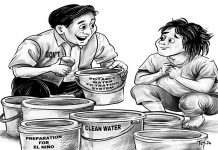




RICE IS a cornerstone of the Western Visayas’ economy, a source of livelihood for thousands of farming families, and a key pillar of food security. For decades, government agencies have pursued the goal of increasing rice production to reduce dependence on imports and ensure that everyone has access to affordable rice.
But as irrigation dams dry up, temperatures soar, and droughts become more frequent, can the region still achieve rice sufficiency under increasingly challenging climate conditions?
The National Irrigation Administration (NIA) Region 6 recently reported that several major irrigation systems in Iloilo, Antique, Aklan, and Capiz have fallen to critical low water levels due to extreme heat and the looming threat of a possible “Super El Niño.” These irrigation systems support thousands of hectares of agricultural land and serve as lifelines for rice farmers throughout the region. When irrigation water becomes scarce, rice production inevitably suffers.
Unlike some crops that can tolerate dry conditions, rice requires substantial amounts of water throughout much of its growing cycle. A prolonged shortage can reduce yields, delay planting schedules, and in severe cases, force farmers to leave portions of their land idle. The result is lower production at a time when population growth continues to increase food demand.
This reality exposes one of the greatest challenges facing rice sufficiency efforts today: climate change is altering the very conditions upon which traditional agricultural planning has long depended.
Western Visayas has experienced recurring El Niño episodes before, but the frequency and intensity of extreme weather events are becoming increasingly concerning. Every drought season places farmers at risk and raises questions about the sustainability of current production targets.
The problem extends beyond weather alone. Many irrigation systems remain vulnerable to water shortages. Watershed degradation continues to affect the rivers and reservoirs that supply agricultural areas. In some locations, inefficient irrigation infrastructure results in significant water losses before the resource even reaches farms. These structural weaknesses make it more difficult to maintain stable rice production during periods of environmental stress.
Western Visayas remains one of the country’s important agricultural regions. Government agencies have introduced measures such as rotational irrigation, alternate wetting and drying technology, revised cropping calendars, and the promotion of climate-adaptive farming practices. However, achieving rice sufficiency in the future will require a different mindset from the one that guided agricultural policy in the past. Success can no longer be measured solely by the number of hectares planted or the volume of rice harvested during favorable years. It must also be measured by resilience — the ability of the agricultural sector to withstand droughts, extreme heat, and other climate-related disruptions without suffering catastrophic losses.
This means investing more aggressively in modern irrigation systems, water impounding facilities, watershed rehabilitation, climate-resilient agricultural technologies, and research on drought-resistant rice varieties. It also means strengthening support systems for farmers through crop insurance, technical assistance, and access to financing.
Perhaps most importantly, policymakers must recognize that water security and food security are inseparable. No rice sufficiency program can succeed if the region’s water sources continue to shrink and deteriorate.