

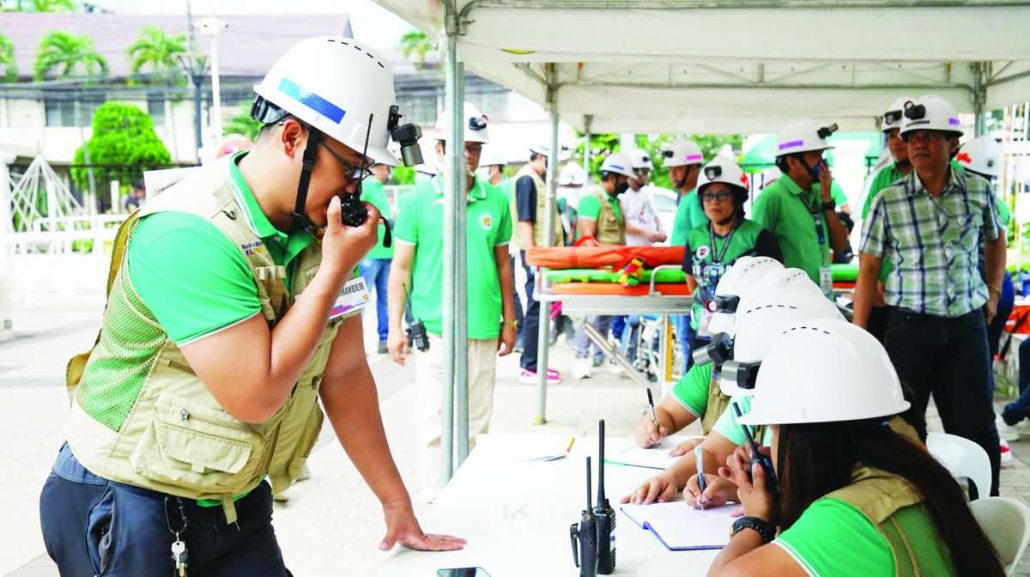
ILOILO – The Iloilo Provincial Capitol completed its fourth-quarter earthquake drill in a record 19 minutes on Thursday, November 5, with emergency responders rescuing three simulated casualties in just seven minutes, and government personnel showing improved disaster preparedness.
The Provincial Disaster Risk Reduction and Management Office (PDRRMO) attributed the faster response to regular quarterly exercises that have familiarized Capitol employees and visitors with emergency evacuation and rescue procedures.
“We are very happy. Naka-record-breaking kita nga 19 minutes,” said PDRRMO officer-in-charge Dr. Alfonso R. Baldonado III.
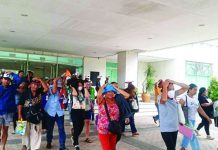
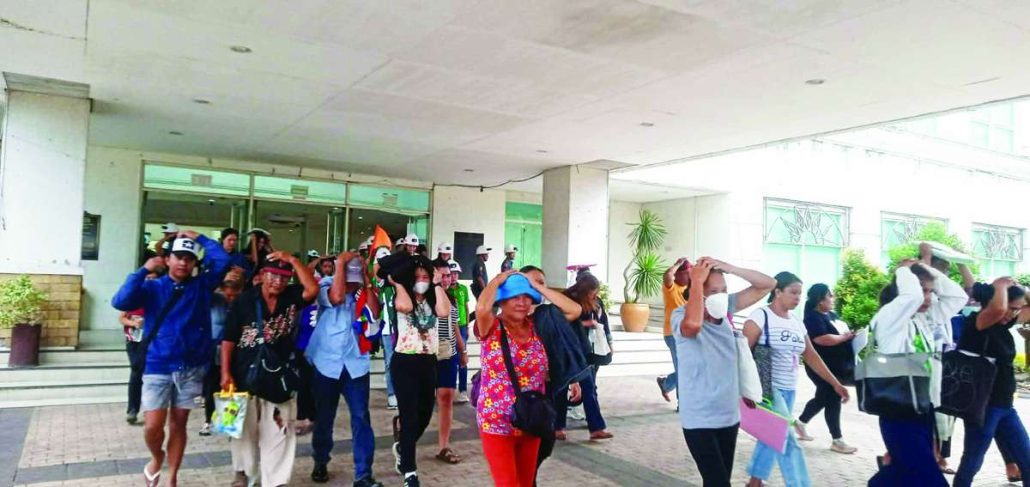
The Nationwide Simultaneous Earthquake Drill (NSED) simulated a magnitude 7.0 earthquake. Employees and transacting clients performed the “Duck, Cover, and Hold” procedure before evacuating to the designated assembly area in front of the nearby National Museum of the Philippines-Iloilo.
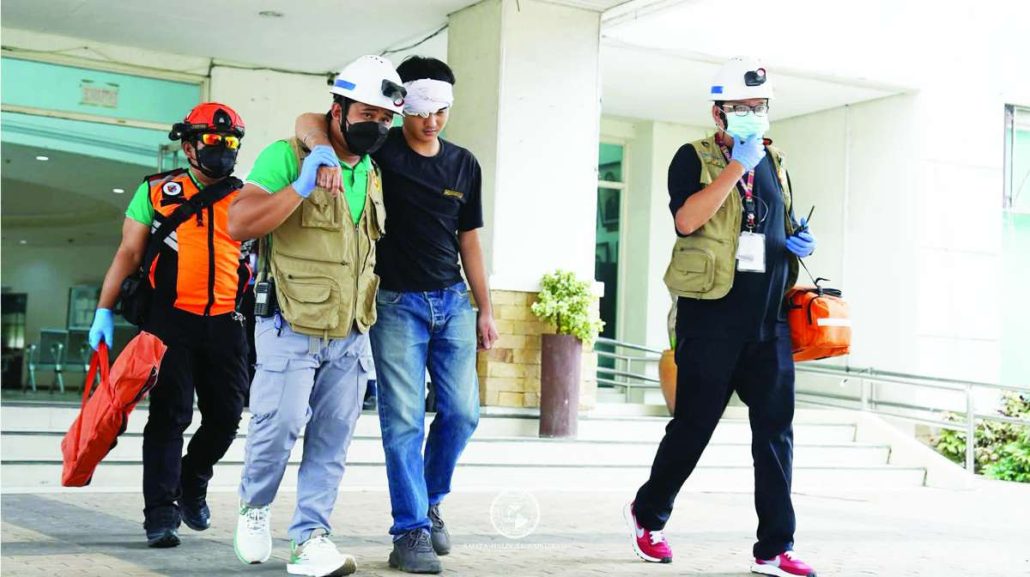
The exercise also simulated an aftershock that left three injured individuals trapped inside the Capitol building and Casa Real de Iloilo. Emergency responders successfully extracted the casualties within seven minutes.
A simulated fire at the rear portion of the Capitol building further tested the coordination and response capabilities of firefighters and rescue personnel.
Baldonado credited the improved performance to the employees’ familiarity with emergency protocols developed through repeated exercises.
“Malawig na ang praktisay naton …that’s why ang cooperation, pati ang attitude sang aton nga mga personnel diri second nature na nila,” he said.
With basic evacuation procedures becoming routine, the PDRRMO plans to introduce more challenging scenarios in its 2027 earthquake drills, including the evacuation and management of visiting dignitaries, such as ambassadors meeting with the governor.
Despite the record completion time, Baldonado acknowledged that further improvements remain necessary, particularly because the actual intensity of future earthquakes cannot be predicted and the Capitol complex accommodates numerous employees and visitors daily.
He nevertheless expressed satisfaction with the coordination demonstrated by key participating offices, including the Provincial Engineering Office, Hospital Management Office, Provincial Health Office and PDRRMO.
The most potent earthquake ever recorded in Iloilo – and on Panay Island – occurred on January 25, 1948 — a magnitude 7.8 tremor dubbed the “Lady Caycay” earthquake.
Centered near Anini-y, Antique, its Mercalli intensity reached X (“Extreme”), ripping open fissures across Iloilo and Antique, and causing a small tsunami that reportedly killed two along the Iloilo Strait.
The destruction was widespread, and more evident on Spanish-era churches — 55 were hit and 17 collapsed outright. In Iloilo alone, belfries of historic churches in Jaro, San Joaquin, Arevalo and others toppled. Reports at that time told of approximately 21 fatalities and 43 injuries.
Infrastructure failure included large ground fissures (some up to four meters wide) and crumbling bridges and some buildings.
The “Lady Caycay” earthquake remains the second-largest in Philippine history, surpassed only by the 7.8 magnitude event near Luzon in 1990, and serves as a reminder: Panay Island is highly vulnerable to intense seismic activity due to the West Panay Fault.
The West Panay Fault is a significant geological fault line. It stretches over 90 kilometers, traversing towns in Iloilo (San Joaquin, Miag-ao, Igbaras, Tubungan, Leon, Alimodian, Janiuay, Lambunao), Antique (Sibalom, San Remigio, Valderrama, Pandan), Capiz (Tapaz, Jamindan), and Aklan (Libacao, Madalag, Malinao).
The fault has been linked to Lady Caycay earthquake and the 7.1 magnitude 1990 Panay earthquake, with its epicenter near Culasi, Antique./PN