CONSIDERED to be a landlocked community, Brgy. Payauan in Candoni, Negros Occidental boasts of about 2,086 hectares of land area and the potential of growing all types of crops and commodities such as rice, sugarcane, corn, peanuts, ginger, and banana. While all of this sounds good in reality, most of the farmers in the community cannot maximize the production of their farmlands.
With no appropriate system, farming is greatly influenced by chemical farming which results in depletion of soil fertility and even harm to human health. The community also faces the challenge of limited access to water for various utilizations like the use during drought season, care for animals, watering the garden, pond, and even taking a bath and washing their clothes.
Aside from that, most farmers continue to purchase vegetables and fruits in the market where the safety of the acquired food is at stake. Moreover, the resident’s intake of food with high nutritional value is also relatively absent in which can be addressed by the community itself having numerous crops in the backyard.
Taking the step of creating an appreciation to the capability of their land, the Eco Agri Foundation – an NGO that aims to advocate organic farming with proper machine and equipment – partners with the Department of Science and Technology (DOST) to assist the farmers of the community in providing a farming system through its Community Empowerment thru Science and Technology (CEST) Program.
The beneficiaries under the Livelihood/Economic Enterprise Development will involve the three organized farmers associations namely Alunoy-Payauan Irrigators Association, Payauan Farmers Association, and Tablas Sitau Small Water Impounding System Association.
The farmer associations will be provided with organic composting demonstration centers spread in strategic areas of the barangay using vermiculture technology and will be installed with three units of customized water harvesting facility for home uses, care for animals, gardening, pond maintenance, bathing, and washing clothes.
With this component, the project foresees to transform farmers and or farming families by gradually producing or processing their organic fertilizer through the vermicomposting method for input use in their garden and farm.
Meanwhile, the program will conduct a forum on Food and Safety and Pinggang Pinoy and install the first digital science library STARBOOKS to the community’s rural barangay school.
Pursuing an eco-friendly and prepared community in times of disaster, the program will also provide planting materials for increased forest cover, a forum on environmental protection/waste management, and provide IEC materials, and a forum on disaster risk reduction.
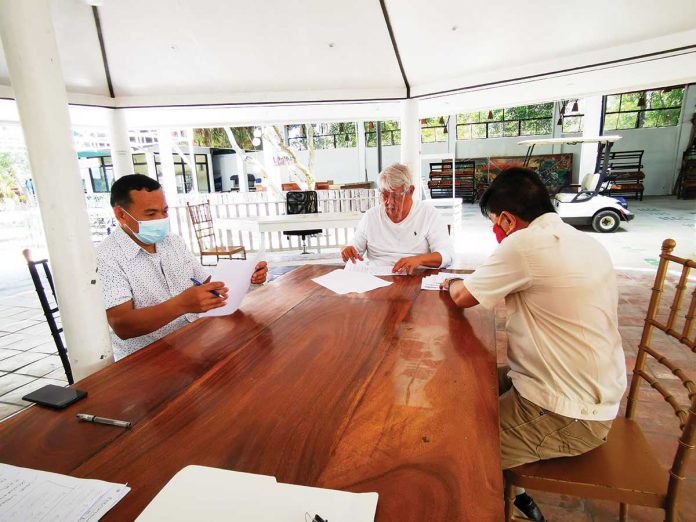
Recently, the Eco Agri president Ramon Uy, Sr., executive director and project team leader Danny Moraca, and DOST-6 representative Engr. Allan Francis Daraug signed a memorandum of agreement (MOA) between DOST-6 and Eco Agri, Incorporated to pursue the project.
Immediately after the MOA signing, the fund amounting to P1,454,198.40 was released to the partner agency for the implementation of the project. (DOST-6)