


ILOILO City – Fifty-six barangays in this city failed to submit their required monthly financial reports in 2025 alone, triggering unapproved budgets, delayed honoraria, and stalled community projects, according to records from the city accountant’s office.
Some barangays have gaps in compliance dating back to 2019, compounding what city officials now describe as a chronic governance breakdown.
The non-submission has forced several barangays to operate on re-enacted budgets — in some cases for up to three years — depriving constituents of timely programs and essential services.
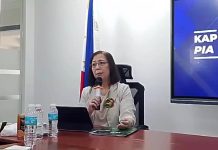
Councilor Rex Marcus Sarabia, chairperson of the Sangguniang Panlungsod’s Committee on Appropriations, said the Department of Interior and Local Government (DILG) had cited laziness and failure to submit financial reports as major causes of the delays. However, he emphasized that the issue runs deeper than simple neglect.
“It works both ways. I honestly do not believe it is purely laziness. It may be a lack of technical ability,” Sarabia said. “Here in Iloilo City, we have the capacity to hire technical personnel and experts. I myself am a lawyer, not an accountant, and I cannot prepare financial statements. So I cannot expect the same level of competence from barangay officials. This is an issue we really need to focus on.”
Sarabia described the situation as a recurring problem despite previous interventions by the city government, prompting him to call for what he termed a more decisive solution.
“Why not make our strategy revolutionary in solving this problem?” he said. “We are already approving barangay annual budgets for 2026, but many of the budgets I am approving are still from 2025. Some barangays have re-enacted budgets for up to three years. That is a huge deprivation of services for our constituents.”
To address the impasse, Sarabia is pushing for the passage of an Iloilo City Barangay Budgetary Reform Ordinance that would institutionalize reforms in barangay financial management.
“One of the remedies is to pass a barangay budgetary reform ordinance. We need to create a permanent barangay budget reform body and hire an expert team that can assist barangay officials,” he said. “Previously, the city had technical working groups and conducted seminars and workshops, but there was no permanent body. We need something sustained.”
The proposed ordinance would impose a mandatory barangay budgetary calendar, establish a dedicated budgetary reform fund, and allocate resources for contractual and job-order experts who will directly assist barangays in preparing and completing financial documents.
“Through this ordinance, we can develop a system where experts help barangays maximize their budgets and, in turn, maximize services to the people,” Sarabia said.
The city council is also considering an investigation in aid of legislation to pinpoint the root causes of the persistent delays and craft more targeted policy responses.
“We need to identify the root cause so we will know what exactly to fix,” Sarabia said. “At the end of the day, what we want is simple—barangays that are capable of spending their budgets properly and delivering timely services to our people.”/PN