


ILOILO City – Hundreds of households relying on shallow wells in densely populated communities here face potential health risks. Ahead of a possible Super El Niño, the city government has stepped up inspections of contaminated water sources.
The General Services Office (GSO) has prioritized water quality monitoring in 25 high-risk barangays amid concerns that wastewater from septic tanks and drainage canals is seeping into shallow wells, potentially making them unsafe for household use.
GSO head Engr. Neil Ravena said the city has more than 1,000 shallow wells, with inspection teams currently monitoring water sources in 24 barangays.
Among the areas under scrutiny are barangays Muelle-Loney and Zamora-Melleza in the City Proper district, where authorities reported possible contamination and water discoloration.
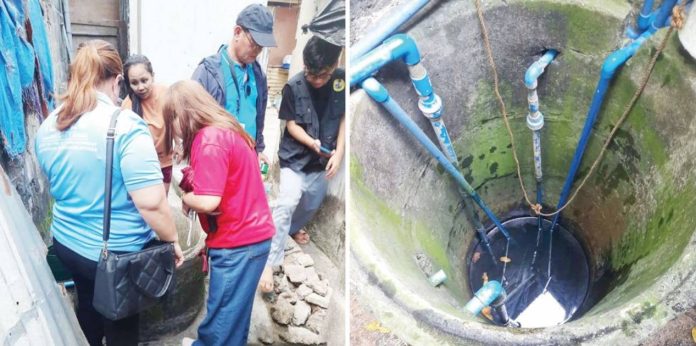
Three shallow wells in Muelle-Loney are undergoing validation, while two privately owned wells and one communal well in Zamora-Melleza were found to have discolored water.
“We suspect that the contamination came from the canal. The contaminated water may have accumulated or seeped into the shallow wells,” Ravena said.
Residents have undertaken drainage cleaning and declogging, resulting in visible improvements in water clarity. However, Ravena warned that clearer water does not necessarily mean it is safe.
“Chlorination and the cleaning of the wells are ongoing. We are waiting for the laboratory results to determine whether these wells should be condemned or are still safe to use,” he said.
The city has already recommended permanently abandoning several shallow wells that repeatedly failed laboratory tests despite chlorination.
Among them is a well in Barangay Ingore, La Paz district, which authorities recommended should no longer be used as a water source. The city also provided an alternative water storage facility.
Ravena attributed the contamination risks partly to overcrowding, particularly in waterfront communities and older urban districts where septic tanks and shallow wells are often located too close to each other.
“Shallow wells are surface water sources, not deep groundwater sources. There should be a required distance between septic tanks and shallow wells to prevent contamination,” Ravena said.
He cited a recommended separation of approximately 25 meters, although limited residential space makes compliance difficult in densely populated barangays.
Unlike deep groundwater sources, shallow wells are more vulnerable to pollutants from surrounding drainage systems, wastewater and septic tanks.
Two GSO teams are conducting inspections and collecting water samples, prioritizing areas identified by the City Disaster Risk Reduction and Management Office as highly affected based on water quality assessments.
The intensified monitoring forms part of Iloilo City’s preparations for a possible Super El Niño, which could strain water supplies and force more households to depend on alternative sources.
Ravena stressed that laboratory testing, not water clarity alone, must determine whether shallow wells remain safe for use.
The city aims to identify and condemn unsafe water sources before prolonged dry conditions potentially increase residents’ dependence on contaminated wells./PN