


ILOILO – Dengue has claimed more lives in Iloilo Province this year despite a 16-percent decline in infections, raising fresh concerns among health authorities as cases remain unusually high well into October, when the mosquito-borne disease would normally be on the decline.
Data from the Iloilo Provincial Health Office (IPHO) showed that 21 people have died from dengue between January 4 and October 10, 2026, surpassing the 20 fatalities recorded during the same period last year.
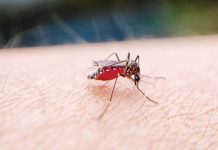
Dengue is a viral disease transmitted through the bite of infected day-biting Aedes egypti and Aedes albopictus mosquitoes, which commonly breed in stagnant water collected in discarded containers, uncovered water storage vessels, clogged gutters, and other household surroundings.
The disease can cause high fever, severe headache, muscle and joint pain, nausea, and rashes. Severe cases may result in bleeding, shock, and death.
The province has logged 4,215 dengue cases, down from 5,010 cases during the comparable period in 2025. However, health officials warned that the continued transmission of the disease, particularly in northern Iloilo, indicates that the dengue threat remains far from over.
The neighboring municipalities of Estancia and Carles have emerged as the province’s most alarming dengue hotspots, accounting for a combined 764 infections and 12 deaths, or more than half of the province’s total fatalities.
Estancia recorded the highest number of infections at 460, including eight deaths, while Carles followed with 304 cases and four deaths.
The two municipalities also accounted for 70 of the 280 new dengue cases recorded during morbidity week 40, covering October 3 to 10. Carles registered 39 new infections, while Estancia recorded 31.
Dr. Rodney Labis, head of the IPHO Health Service Delivery Division, expressed concern over the persistence of dengue infections beyond the period when cases traditionally begin to subside.
He noted that dengue cases in 2025 peaked between July and August before gradually declining during the last four months of the year.
This year, however, infections have remained elevated even in October, suggesting a prolonged period of dengue transmission.
Labis attributed the continuing infections partly to intermittent rainfall, which creates additional breeding grounds for dengue-carrying mosquitoes.
He urged residents to sustain efforts to search for and destroy mosquito breeding sites, emphasizing the importance of preventing mosquitoes from multiplying in communities.
Specifically, people are advised to eliminate standing water, cover water containers, maintain clean surroundings, use mosquito repellents, and seek prompt medical attention when dengue symptoms develop.
Warning signs such as severe abdominal pain, persistent vomiting, bleeding, and unusual weakness require immediate medical evaluation.
81 BARANGAYS WITH CASE CLUSTERS
The IPHO also identified dengue case clustering in 81 barangays across 28 local government areas in the province, underscoring the widespread transmission of the disease.
Case clustering refers to the occurrence of at least three dengue infections within four consecutive weeks in a particular area.
Estancia topped the list with 15 barangays reporting clusters, followed by Carles with 11, Balasan with seven, Calinog with six, and Dumangas with three.
In Estancia, the affected barangays included Bolaqueña with 26 cases, Poblacion Zone I with 16, Botongon with 14, Gogo with 13, and Tacbuyan with 12.
Other affected barangays were Bayas, Bayuyan, Calapcan, Caro-an, Daan Banwa, Daculan, Lumbia, Malibog, Poblacion Zone II, and Tanza.
In Carles, the highest concentrations were recorded in Guintagan with 18 cases, Bancal with 14, Poblacion with 13, and Dayhagan with 12.
Other affected barangays included Abong, Barosbos, Bolo, Cabilao Grande, Cabuguana, Cawayan, and Punta.
Balasan, another northern Iloilo municipality, recorded clustering in Balanti-an, Camambugan, Mamhut Norte, Mamhut Sur, Pani-an, Poblacion Sur, and Salong.
The clustering of infections across neighboring municipalities has heightened the need for sustained mosquito-control measures, particularly in communities experiencing repeated dengue transmission.
OTHER DENGUE HOTSPOTS
Outside Estancia and Carles, Calinog recorded the third-highest number of dengue cases with 252, followed by Cabatuan with 217.
Passi City and Dumangas each registered 213 cases, followed by Ajuy with 168 cases and two deaths, Balasan with 146, Concepcion with 136, and Tigbauan with 130.
Other municipalities with relatively high infections included Lambunao with 124 cases, Alimodian with 120, Oton with 114, and Batad with 102.
Additional dengue fatalities were recorded in San Dionisio, Sara, Dingle, Miag-ao, San Rafael, and San Joaquin, with one death each.
The figures highlight the continuing threat posed by dengue even in municipalities with comparatively fewer infections./PN