



MANILA — The Department of Foreign Affairs (DFA) on Monday asserted that any prospective joint oil and gas exploration deals with foreign governments, including China, will be strictly bound by Philippine laws and must not compromise the country’s sovereign rights, amid renewed discussions on energy security and cooperation.
In a statement, the DFA emphasized that all agreements covering energy resources within the Philippines’ Exclusive Economic Zone (EEZ) will be governed by the Constitution and existing legal frameworks.
“Any decision to pursue, structure, or conclude an agreement on oil and gas cooperation, with China or any other foreign government, will be made solely in accordance with the Philippine Constitution and the country’s laws, jurisprudence and regulations, and in full assertion of its sovereign prerogatives,” the agency said.
The DFA underscored that the Philippines retains exclusive rights over its natural resources, even as it considers partnerships to address growing energy demands and global supply uncertainties.
The assurance comes as the government, under President Ferdinand Marcos Jr., explores lawful and viable options to secure stable energy sources amid ongoing volatility in global oil markets.
The DFA said diplomatic engagement remains key in ongoing discussions with China and other countries, particularly on potential energy cooperation, while maintaining the Philippines’ territorial claims.
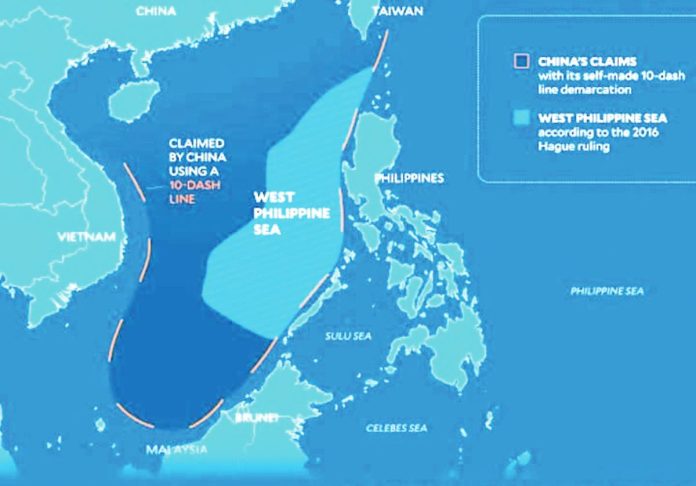
Lawmakers and stakeholders have also called for greater transparency and caution, especially in any revived talks on joint exploration in the West Philippine Sea.
The issue remains highly sensitive due to overlapping claims in the South China Sea, despite a 2016 international arbitral ruling that invalidated China’s expansive claims in areas that fall within the Philippines’ maritime territory.
Past efforts at joint exploration have encountered legal hurdles. In 2023, the Supreme Court struck down a previous tripartite agreement involving the Philippines, China, and Vietnam for joint seismic activities in disputed waters.
The DFA said it will continue coordinating with relevant government agencies to ensure that any future energy arrangements remain consistent with Philippine sovereignty, international law, and the peaceful resolution of disputes./PN