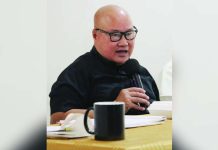



ILOILO City — The Department of Agrarian Reform (DAR) in Western Visayas is pushing to complete all remaining land acquisition and distribution ahead of the government’s 2028 deadline, as its new regional chief moves to strengthen support services that would make awarded lands more productive and profitable for farmers.
Acting DAR-6 Regional Director Anthony P. Arostique said the agency is approaching the final stretch of land distribution in the region, allowing it to increasingly concentrate resources on irrigation, farm-to-market roads, bridges and agricultural machinery for agrarian reform beneficiaries (ARBs).
Arostique formally assumed office effective September 14, 2026, following the death of former Regional Director Florentino D. Siladan.
As DAR-6 transitions under new leadership, Arostique said agrarian reform should be understood not simply as the transfer of agricultural land but as a government social justice program intended to give landless farmers access to productive assets.
“The entirety of the Agrarian Reform Program, as perceived by our stakeholders… is that the government confiscates land,” Arostique stated.
“But this is part of the social justice program of the government where we want to redistribute public and private agricultural land to landless farmers so that government resources are diversified,” he added.
The regional office is implementing the New Agrarian Emancipation Act or Republic Act No. 11953 as it works to clear its remaining land acquisition and distribution balance before 2028.
With land distribution nearing completion, Arostique said DAR-6 is seeking a bigger support-services component in its proposed 2027 budget, particularly for infrastructure and agricultural inputs that could raise the productivity of ARBs.
“To intensify the provision of support services to the farmers — Amo na ang focus namon subong as proposed sa 2027 nga hudget; medyo dako ang component sang support services. The Secretary gives emphasis to support services like irrigation projects, farm-to-market-roads, bridges, and farm machinery inputs,” he said.
Arostique said strengthening the agricultural sector is crucial as Western Visayas continues to expand economically.
“Region 6 is considered one of the fast-growing economies, and we cannot overlook the significance of the Department of Agrarian Reform in terms of the land component, agricultural productivity, and the aspects of the agricultural economy,” he asserted.
DAR-6 is also moving to speed up the resolution of pending agrarian cases following the administrative separation of the Negros Island Region.
Around 3,000 pending cases previously handled by DAR-6 have been transferred to Negros offices, easing the caseload of the Western Visayas regional legal divisions and adjudicators.
Arostique brings about 25 years of experience in agrarian reform to the regional post.
He began as a Contract of Service worker under the DAR-United Nations Development Programme before serving as assistant statistician, senior agrarian reform program officer, municipal agrarian reform officer and chief agrarian reform officer.
He later became officer-in-charge Provincial Agrarian Reform Officer II of Capiz and was appointed Assistant Regional Director for Operations in 2024 before assuming the region’s top post this month.
A native of Lemery, Iloilo and longtime resident of Roxas City, Capiz, Arostique holds a Political Science degree from Central Philippine University and a Master in Public Administration from Colegio Dela Purisima Concepcion. Before joining government, he worked with non-government organizations in community organizing, cooperative development and multi-stakeholder collaboration./PN