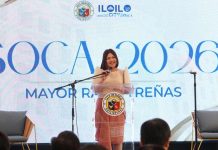

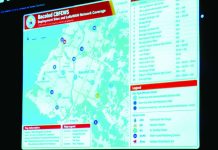


WESTERN Visayas has just been given something disasters rarely provide: a warning without the casualties.
PROJECT MedX, the region’s first full-scale, multi-sector disaster simulation, exposed weaknesses in coordination, emergency response times, hospital referrals and the ability of neighboring local governments to reinforce one another during a mass-casualty emergency.
That should concern us. But it should also be welcomed.
A simulation that exposes weaknesses is infinitely more valuable than an exercise staged merely to produce impressive photographs, sirens, uniforms and declarations of success. The purpose of a disaster drill is precisely to discover what could go wrong — before real people pay for those weaknesses with their lives.
More than 30 government, private, healthcare, humanitarian and academic institutions participated in the exercise, which simulated a collision involving a chemical tanker and several passenger vehicles in Oton, Iloilo. Responders had to rescue and triage casualties, contain a hazardous-material spill, coordinate ambulances and prepare hospitals to receive patients.
It was deliberately difficult. A real catastrophe will be worse.
Among the gaps identified were coordination between government health offices and private hospitals, responder arrival times and the capacity of neighboring municipalities to assist Oton. The exercise also highlighted the importance of proper medical supervision and communication when patients are transported from disaster sites to hospitals.
These are not minor procedural matters.
During a mass-casualty incident, minutes matter. Confusion over which hospital can accept patients, who commands an operation, where ambulances should go or whether receiving hospitals have been alerted can mean the difference between life and death.
And disasters do not respect bureaucratic limits.
As A-PAD Philippines executive director Athena Peñaloza correctly observed, “Emergency and disaster don’t have boundaries.”
Neither, therefore, should disaster response.
A catastrophe in Oton could overwhelm its resources and require assistance from Iloilo City and neighboring municipalities. A major earthquake, typhoon, chemical accident or other large-scale emergency could simultaneously affect several local government units. Public hospitals could be overwhelmed, making private hospitals indispensable.
This is why interoperability must exist long before disaster strikes.
The challenge now is ensuring that PROJECT MedX does not become another government exercise whose findings disappear into reports, meetings and filing cabinets.
Every weakness identified must have a corresponding corrective action, responsible agency and timetable.
If communications failed, fix them. If ambulance deployment was slow, determine why. If hospitals encountered problems coordinating patient referrals, establish a common protocol. If neighboring municipalities struggled to reinforce the affected area, clarify mutual-aid arrangements. If responders were uncertain about command responsibilities, strengthen Incident Command System training.
Then conduct another drill and test whether the weaknesses remain.
Disaster preparedness must be measured by whether institutions can actually work together when people are injured, communications are strained, hospitals are filling up and every minute counts.
Western Visayas was fortunate this time.
The chemical spill was simulated. The casualties were simulated. The emergency was simulated.
The gaps were real.
Authorities must fix them while they still have the luxury of doing so without counting the dead.