



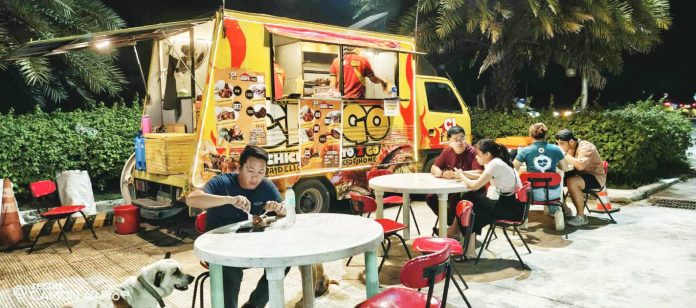
ILOILO City – The local food truck community has welcomed the passage of the Food Trucks and Mobile Food Kiosks Ordinance. They describe it as a long-awaited measure that formally recognizes and regulates their sector in the city.
Julix Mendoza, chair of the Food Trucks Community, expressed gratitude to the Iloilo City Council for approving the ordinance, saying it finally addresses long-standing gaps in existing regulations that left food truck operators without proper legal coverage.
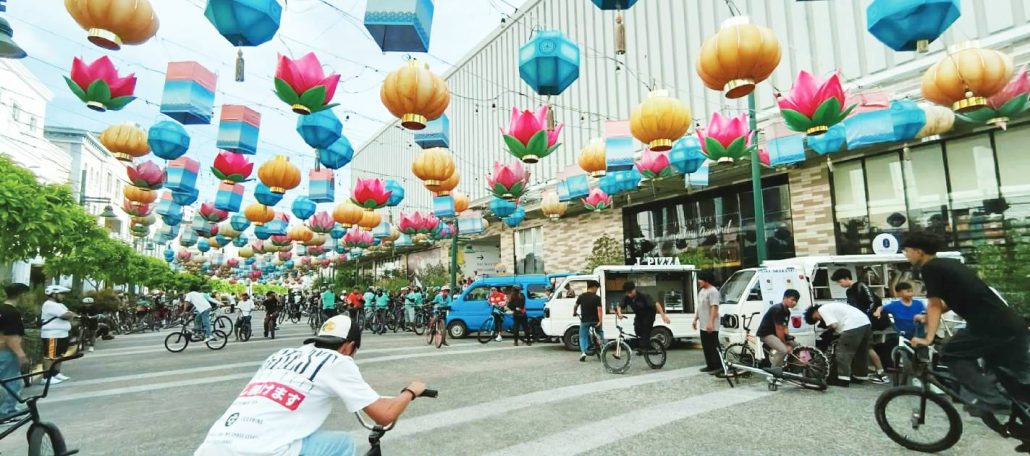
“First of all, we are very thankful to the City Council for finally approving this ordinance that covers and regulates food trucks. The reason we strongly pushed for this is because existing laws did not cover us. Permits were only designed for ambulant vendors—those with units sized around two by four feet. Our units exceed that size, so we couldn’t secure permits because we didn’t exist within the ordinance guidelines,” Mendoza said.
Because of this, Mendoza said food truck operators coordinated with City Hall and relevant offices to push for their inclusion in local regulations. Through the new ordinance, there is now a formal law that recognizes and governs their operations.
It can be recalled that Mayor Raisa S. Treñas herself endorsed the measure to the City Council.
Mendoza added that food truck businesses are a growing sector of Iloilo’s economy, contributing to employment, tourism, and the city’s culinary identity.
He said that globally, food trucks are booming because they are easy to deploy. They do not leave permanent structures or waste, making them adaptable and efficient.
Mendoza also addressed claims that the ordinance is “anti-poor,” clarifying that similar regulations already apply to ambulant vendors, especially in areas near schools, hospitals, and other high foot-traffic zones.
Under the new policy, food trucks and mobile kiosks will be regulated by the Business Permits and Licensing Division (BPLD), while ambulant vendors will remain under the supervision of the Special Services Division (SSD). They will only be allowed to operate in designated areas identified by the city or on private property with the owner’s consent.
For safety, the ordinance reiterates that operations must be at least 20 meters away from schools, hospitals, churches, and other public establishments, as well as from no-vending zones and areas that may pose risks such as emergency access routes and traffic-prone locations.
“These rules are in place for safety and public order,” he said. “Food trucks are larger—about the size of a tricycle or multicab. Placing them in crowded areas would only increase congestion and pose safety risks, especially where ambulant vendors are already operating.”
With the ordinance in place, Mendoza said food truck operators can now legally conduct business and better serve the public.
He described the measure as a “landmark” initiative, noting that only a few cities in the country have similar policies.
He also expressed optimism that once signed by Mayor Treñas, the ordinance will further strengthen Iloilo’s reputation as a City of Gastronomy by showcasing a modern and dynamic aspect of its food culture.
“This gives us equal opportunity to do business and contribute to the city,” Mendoza said. “Food trucks are part of Iloilo’s evolving culinary identity, and we are ready to help promote it.”
Mendoza also thanked city officials and stakeholders who supported the measure and urged fellow operators to continue developing the industry and elevating Iloilo’s status as a premier food destination.
According to Councilor Rudolph Jeffrey Ganzon, author of the ordinance and chair of the City Council’s Committee on Trade and Commerce, the measure provides clear guidelines and processes for issuing permits, especially during food festivals and city celebrations.
Ganzon said the new measure will enable the city to properly regulate and monitor the operations of these businesses.
He also emphasized that the city government recognizes food trucks and mobile food kiosks as legitimate enterprises that generate jobs, support local farmers and suppliers, and help promote Iloilo’s tourism and cultural identity.
Through the ordinance, the city aims to give food trucks and mobile kiosks their own identity and legal standing, separate from ambulant vendors, which are governed by different regulations.
Overall, the ordinance is seen as a step toward better governance and the promotion of Iloilo City’s growing food truck sector./PN