

ILOILO City – More than 2,000 tricycle drivers in Iloilo City are set to receive P5,000 in financial assistance from the national government. This aid aims to cushion the impact of rising fuel prices driven by ongoing tensions in the Middle East.
Iloilo City is one of 14 cities and municipalities in Western Visayas selected as pilot areas for this government cash aid program, dubbed as “Assistance for Transport Groups Affected by the Rising Cost of Oil.”
The timely aid provision is under the Assistance to Individuals in Crisis Situation (AICS) Program of the Department of Social Welfare and Development (DSWD) Region 6, and will be distributed in coordination with the Iloilo City Government, specifically through the City Social Welfare and Development Office (CSWDO).
According to Mayor Raisa Treñas, the City Government is actively facilitating the submission of requirements to the DSWD, following initial coordination between the two offices.
The CSWDO has already submitted the list of registered drivers to the DSWD for cross-matching with other local government units (LGUs) to avoid duplication of beneficiaries.
As part of the documentation requirements, each beneficiary must present valid professional driver’s license to confirm identity and submit a photocopy of it.
The distribution of the national cash aid is scheduled for April 8, 2026.
Local Support Continues
While awaiting the national funds, Iloilo City’s locally-funded subsidy program remains in full swing.
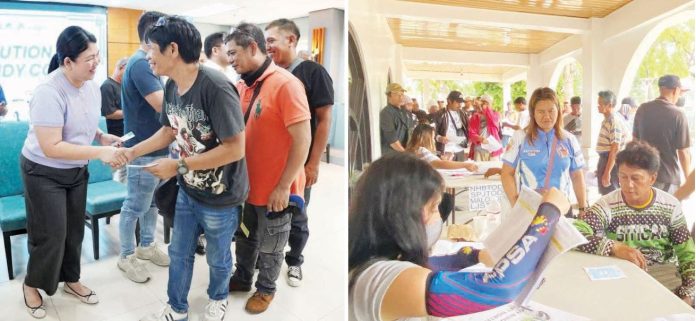
Last week, the city government, led by Mayor Treñas, began distributing fuel subsidies to around 1,718 tricycle driver-beneficiaries.
The mayor assured that the city will continue to support affected drivers for as long as it is able.
“This is just the first release of your fuel subsidy. Next month, we will prepare another round for you,” she said during the distribution of fuel subsidy coupons at City Hall.
This initiative is a direct effort by the city government to ensure that drivers receive immediate assistance amid the ongoing fuel crisis.
Meanwhile, with the anticipated increase in the prices of basic commodities, the mayor also announced that the city is exploring the possibility of providing rice subsidies to the transport sector or the activation of community kitchens.
Speed of action matters
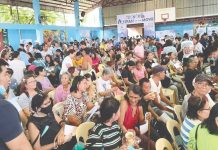
In last week’s regional economic dialogue “Resilient Leadership: Strategy and Strength Amid Global Uncertainties,” convened by Mayor Treñas as Chairperson of the Economic Development Committee of the Regional Development Council 6, experts emphasized that local government units must move quickly, protect vulnerable sectors, and strengthen local industries to cushion the impact of global uncertainties.
The dialogue gathered government, business, and civil society leaders to discuss measures to mitigate the possible effects of the ongoing tensions in the Middle East on the economy of Western Visayas.
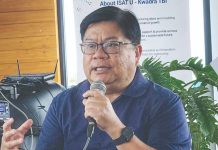
Senior Adviser Jonathan L. Ravelas of Reyes Tacandong & Co., who spoke on “Conflict and the Economy: Current Macroeconomic Situation in the Midst of Global Uncertainties,” said local governments are at the frontline of protecting households, especially low-income families who are the first to feel the effects of rising fuel and food prices.
Ravelas said LGUs can cushion the impact of inflation and economic shocks through practical interventions such as:
* providing transport relief programs and strengthening price monitoring and Kadiwa-type market initiatives to keep food affordable;
* supporting export-oriented MSMEs, food processing, IT-BPM, and tourism services to sustain employment and bring in foreign exchange;
* promoting financial literacy programs to help channel OFW remittances into local investments;
* exercising fiscal discipline, prioritizing essential spending while deferring non-urgent projects; and
* fast-tracking tourism and investment-related infrastructure, especially in LGUs with fiscal surplus, to attract new capital and generate jobs.
He stressed that speed of response is critical during times of uncertainty.
“It is not only about having the right response, but the speed of action so people will feel stability and not fear,” Ravelas noted.
On the other hand, Senior Economist Winston Conrad Padojinog highlighted the importance of targeted interventions during his presentation, “Global Issues, Regional Impacts: The Mezzoeconomic Situation on Geopolitical Conflicts.”
Padojinog recommended that LGUs and national agencies focus on targeted program subsidies for vulnerable sectors.
He also recommended short-term fiscal reprieves for adversely affected MSMEs to help them remain operational, and the pursuit of an agro-industrial development strategy to reduce import dependence and strengthen food security.
He also encouraged the expansion of public-private partnerships (PPP), export-oriented industries, and agro-industrial investments. He cited, for instance, that Western Visayas has strong potential in food processing, bamboo, and other agriculture-linked sectors.
“Pursue partnerships, especially with LGUs. Iloilo is a great example of working PPP. Look at your public markets — it is a very good model to replicate. You are setting a trend, capitalize on that,” he said./PN