A MINE can be measured in tons of coal extracted, in the revenues it generates, and in the economic activity it creates.
But there is another way to measure what a mine means to the people who live beside it.
It can be seen in a street that stays lit after sunset. In a school with reliable electricity. In a water system that reaches a community. In a livelihood that gives a family greater security.
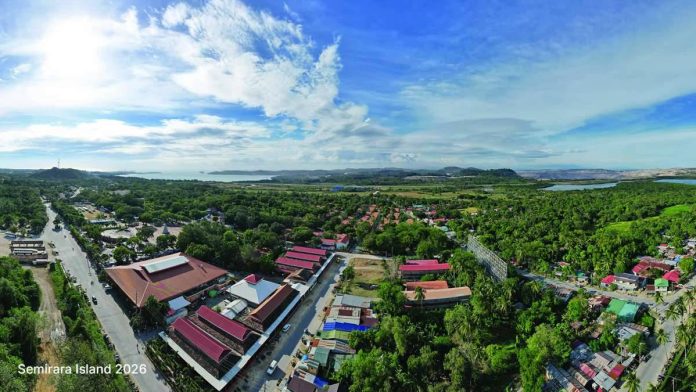
In Semirara, the value of coal does not end when it leaves the mine. A portion of the wealth generated from the resource makes its way back to the communities that host it—through government revenues, public infrastructure, and investments in local development.
Since 1997, Semirara Mining and Power Corporation (SMPC) has remitted a total of P70.55 billion in government share from its energy operations. Of this amount, P12.70 billion has gone to the Municipality of Caluya, P9.9 billion to Barangay Semirara, and P5.64 billion to the Province of Antique, based on data as of June 30, 2026.
These are large numbers. But their significance is easier to appreciate when they are translated into the everyday realities of the communities they help support.
From coal to community
For an island municipality such as Caluya, providing basic services and building infrastructure comes with a challenge that mainland communities know less intimately: distance.
Caluya’s communities are spread across islands. Roads, power systems, water facilities, and other public infrastructure can be more difficult and costly to establish and maintain in geographically isolated areas. Resources that might seem modest elsewhere can take on greater significance when they help connect a community, keep a public facility running, or bring a basic service closer to home.
Government revenues from mining can help provide those resources.
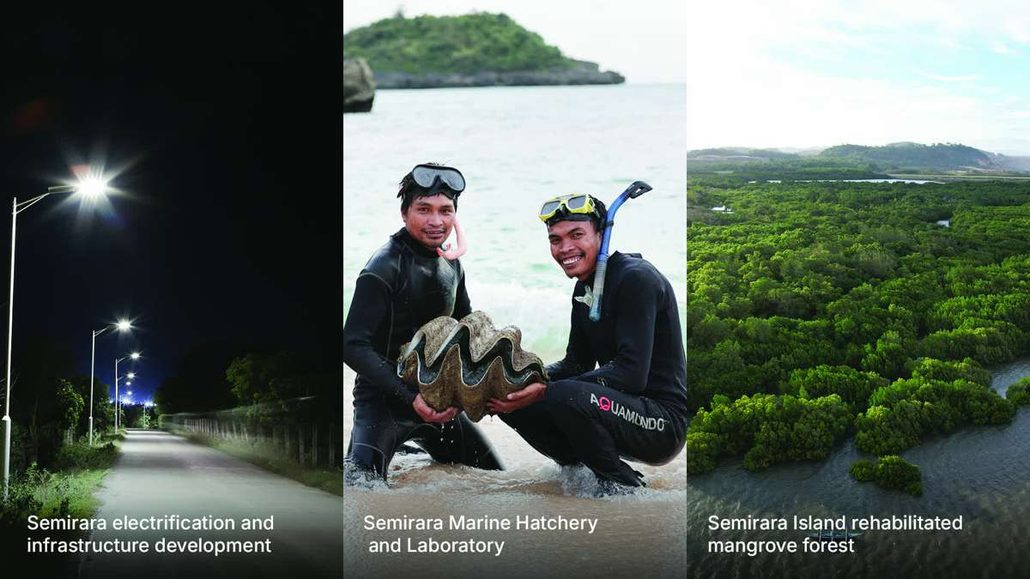
In Caluya, royalty-funded initiatives have included solar-powered installationsstreetlights and beach lights, improvements to electrical distribution lines, solar-powered water systems, and solar power in municipal, barangay, and school buildings.
Each project serves a practical purpose on its own. Together, they contribute to something broader: making essential services more accessible and strengthening the infrastructure on which communities depend.
A streetlight changes a road after dark. A water system can make a basic necessity more accessible. Solar power can help public buildings and schools maintain essential services, particularly in places where conventional infrastructure can be difficult to establish or sustain.
Beyond royalties
The contribution to community development extends beyond government share payments.
SMPC also implements its Social Development Program (SDP), supporting initiatives that respond to the social, economic, environmental, and infrastructure needs of host and neighboring communities.
From 2017 to 2025, SMPC invested approximately P647.51 million through its community development initiatives.
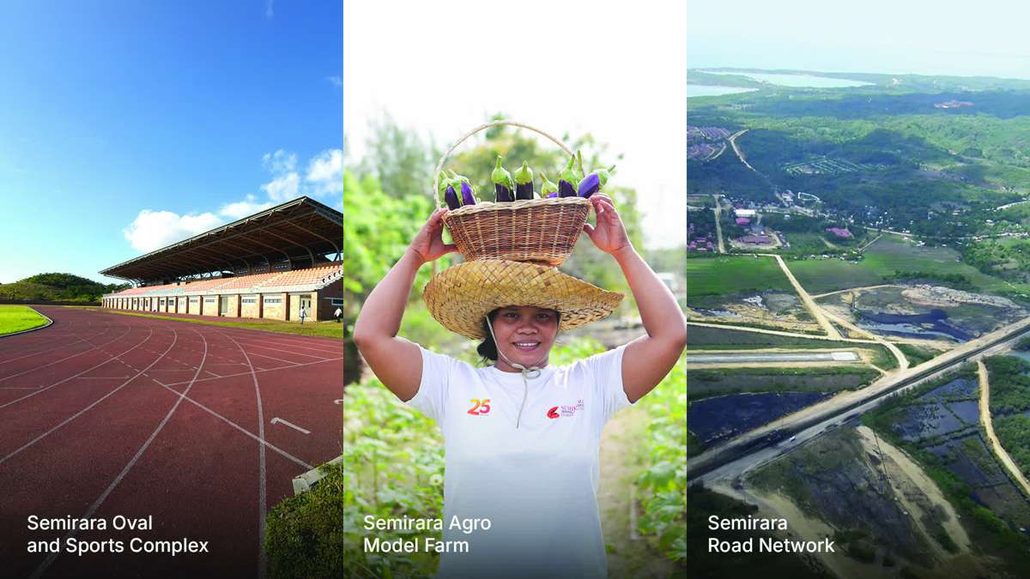
Of this amount, P61.83 million went to education programs and initiatives intended to expand opportunities for students and communities. P69.26 million was allocated to sports and arts center facilities and programs, while P185.55 million went to environmental initiatives, the largest allocation among the program areas.
Infrastructure received P141.15 million, while P81.60 million was directed toward health and safety. Another P85.96 million supported electrification, helping extend access to reliable power. Livelihood programs received P22.16 million, supporting efforts to create or strengthen economic opportunities for community members.
Taken together, these investments reflect the many dimensions of development in a mining community. Development is not simply about putting up buildings or installing equipment. It is also about giving people access to education, creating opportunities to earn a living, protecting the environment, improving health and safety, and providing the infrastructure that allows communities to grow.
The figures provide a sense of scale. The projects give those figures meaning.
A resource with a wider footprint
The story of Semirara’s coal does not begin and end at the mine.
The resource extracted from the island ultimately becomes part of a much larger energy system, but its economic footprint can also be felt much closer to home.
For Caluya, this has meant an evolving relationship between natural resources and local development. Government revenues generated from mining provide resources that can be directed toward public priorities, while SMPC’s community development programs support initiatives in education, livelihoods, infrastructure, health, electrification, sports and the arts, and environmental protection.
The question, then, is not only how much coal can be extracted.
It is also what value can be created from it—and how much of that value can help build a stronger future for the communities that host the resource.
Natural resources are finite. Their significance, therefore, should not be measured only by what they produce today, but also by what they help make possible for the people who live around them.
A street that remains illuminated after sunset. A school with power. A community with better access to water. A livelihood that gives a family another opportunity.
These are ordinary things. But for the people who experience their absence, they can make an extraordinary difference.
And that may be one of the more lasting ways to understand Semirara Mine’s value to Caluya: not simply by the coal that leaves the island, but by the opportunities, infrastructure, and investments that remain./PN