


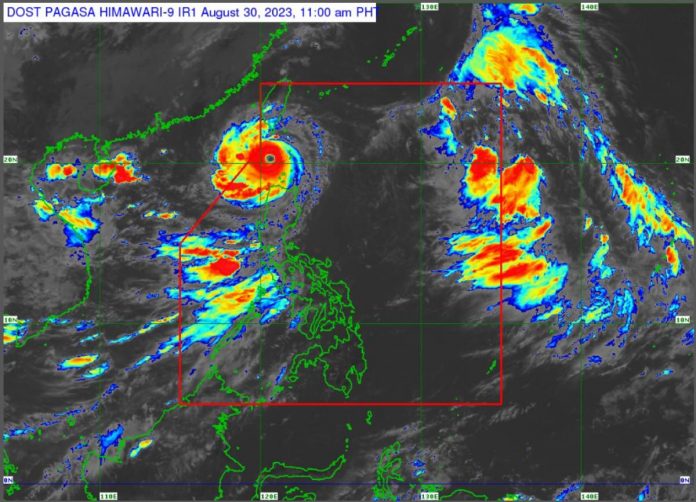
ILOILO – The damage left by the southwest monsoon or habagat enhanced by Typhoon “Goring” in this province was pegged at P63,916,013, data from the Provincial Agriculture Office (PAO) showed.
Rice was the most affected, with damage reaching P61,628,900, which covered 1,619 hectares managed by 1,533 farmers from 15 towns.
Here is the breakdown of rice damage per municipality as of 5 p.m. on Wednesday, Aug. 30:
* San Joaquin – P687,500
* Miag-ao – P476,250
* Tigbauan – P10,801,427
* Oton – P8,308,236
* New Lucena – P2,843,078
* Leganes – P11,934,598
* Zarraga – P152,452
* Pavia – P787,240
* Cabatuan – P1,810,255
* Janiuay – P13,881
* Lambunao – P1,093,982
* Pototan – P402,562
* Dumangas – P11,606,154
* San Enrique – P2,813,874
* Barotac Viejo – P7,897,408
The province’s livestock damage was pegged at P1,468,845; corn at P571,063; and high-value crops at P247,205.
Specifically, livestock losses were reported from the towns of Oton (P1,388,650), Cabatuan (P68,200), San Joaquin (P7,000), and Pavia (P4,995).
Meanwhile, Janiuay and Pototan lost P168,500 and P402,652 worth of corn, respectively.
Damage to high-value crops was only reported in San Joaquin.
PAO chief Dr. Ildefonso Toledo said there could still be changes in the figures as some localities have yet to submit their reports.
Possible assistance
For his part, Toledo cannot ascertain if the provincial government will extend assistance to affected farmers.
He said this would depend on the collated damage report, and there should be a state of calamity declaration from the Sangguniang Panlalawigan.
“Kon tan-awon ta, or on my assessment, daw indi sia maka-qualify sa pag-declare sang state of calamity para mahulag naton ang funds,” Toledo said.
Under the National Disaster Risk Reduction and Management Council’s Memorandum Order No. 60, Series of 2018, and Republic Act 10121, or the Philippine Disaster Risk Reduction and Management Act of 2010, here are the criteria for the declaration of a state of calamity:
* at least 15 percent of the forecasted affected population based on science-based projections needs emergency assistance;
* at least 30 percent of the means of livelihood in the agricultural, business and industrial sectors are affected;
* damage to critical and lifeline infrastructure/facilities such as major roads and bridges, power stations, potable water supply systems, and telecommunication facilities;
* widespread destruction of fishponds, crops, poultry and livestock;
* disruption of lifelines such as food chains, electricity, potable water systems, other transport systems, communication systems, access to health services, and other related systems that cannot be restored within one week, or in the case of highly urbanized areas where restoration of the above lifelines cannot be done within twenty-four hours; and
* significant degradation of the environment and natural resources based on the recommendations of government agencies.
Meanwhile, 314 barangays in the province were affected by flooding as of 11 p.m. on Aug. 30, based on the situational report of the Regional Disaster Risk Reduction and Management Council (RDRRMC) 6.
A total of 27,648 families, or 109,986 individuals, had evacuated.
There were 61 damaged houses reported: 12 totally damaged and 49 partially damaged.
There was no reported casualty, missing person, or major damage to infrastructure.
“Sa gihapon ang aton panugyan nga ipabilin nga mag-aligmat,” said Provincial Disaster Risk Reduction and Management Office head Dr. Jerry Bionat./PN