


ILOILO — One of northern Iloilo’s premier tourist attractions will be off-limits for an entire month.
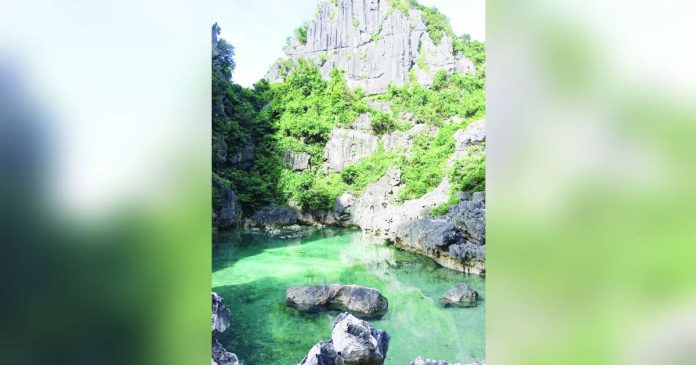
The Carles municipal government ordered the temporary closure of Tangke “Saltwater” Lagoon in the Gigantes Group of Islands amid safety risks from the southwest monsoon (habagat) and the need to give its fragile ecosystem time to recover.
Mayor Arnold Betita II ordered all tourism and recreational activities at the lagoon in Barangay Gabi, Gigantes Sur suspended from September 1 to 30, 2026.
Betita issued Executive Order No. 52 on August 12, citing potentially dangerous sea conditions during the habagat season as well as the need for an “environmental breather” at the lagoon from continuous tourism activity.
“The month of September generally falls within the southwest monsoon season when rough seas, strong waves, unpredictable currents, and adverse weather conditions are frequently experienced in the waters surrounding Gigantes Islands,” the executive order stated.
Although Tangke Lagoon is naturally enclosed by limestone formations, reaching it requires visitors and tourism workers to travel by boat through open waters.
The municipal government warned that strong waves and unpredictable currents could make the approach to the lagoon dangerous, while heavy rainfall and strong winds could heighten risks around its steep limestone cliffs and karst formations.
Aside from protecting tourists, boat operators, guides and tourism workers, the month-long closure is intended to allow the lagoon’s marine and coastal environment to recover from tourism pressure.
Betita said temporary environmental breaks are a recognized sustainable tourism management practice that can help ecosystems regenerate, reduce human impact and protect biodiversity.
During the closure, no tourist will be allowed to enter Tangke Lagoon. Swimming, kayaking, snorkeling, cliff viewing, sightseeing and other recreational activities will likewise be prohibited.
Tourist boats cannot dock or moor at the lagoon for tourism purposes, while tour operators, travel agencies and guides are prohibited from including Tangke in their itineraries during September.
Known for its naturally enclosed saltwater pool surrounded by towering limestone formations, Tangke is among the flagship ecotourism attractions of the Gigantes Islands and Carles.
The lagoon is scheduled to reopen automatically on October 1, 2026, unless the municipal government extends the closure because of prevailing weather conditions, environmental concerns or other public safety considerations.
Aside from the saltwater lagoon, the Gigantes Group of Islands is also known for the critically endangered Gigantes limestone frog — a species found nowhere else on Earth. Officials have warned that unmanaged tourism could threaten the fragile ecosystem where the rare amphibian lives.
Platymantis insulates exists only in the limestone forests and cave systems of the Gigantes Group of Islands. First described in 1960 by herpetologists Walter C. Brown and Angel C. Alcala, the frog’s scientific name “insulatus”, derived from the Latin word for “isolated”, reflects its geographic confinement to the island ecosystem.
Because of its extremely limited distribution and continuing threats to its habitat, the species is listed as Critically Endangered on the International Union for Conservation of Nature (IUCN) Red List.
Honey Lou Talidano, the municipal environment and natural resources officer-designate of the local government of Carles, said the Gigantes limestone frog demonstrates how geographic isolation shapes biodiversity.
“Ang Gigantes Islands are geographically separated from the mainland. Over time, this frog evolved as a unique species that exists only here,” Talidano explained. “It is adapted specifically to limestone forests and cave ecosystems. Indi tanan nga lugar may amo sini nga habitat, so naturally limited gid ang ila distribution.”
Unlike many amphibians, the Platymantis insulatus does not undergo a tadpole stage. Instead, it reproduces through direct development, meaning the eggs hatch directly into miniature frogs. This makes moist limestone caves and forests essential to their survival.
Talidano warned that environmental disturbances could easily damage the fragile limestone karst ecosystem where the frog thrives./PN