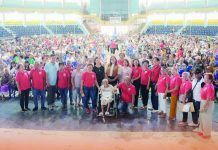


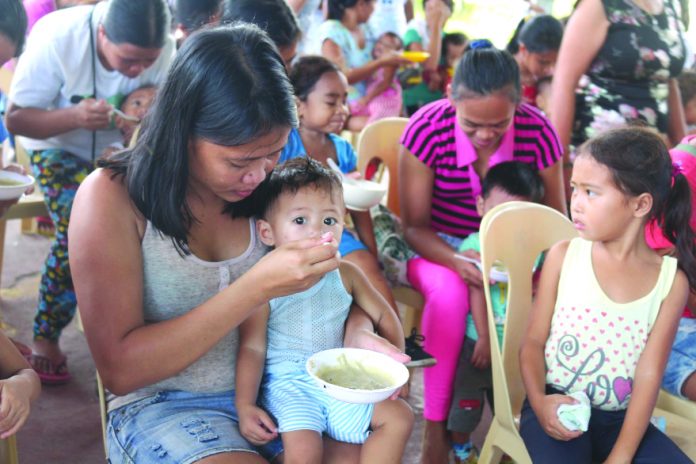
HAMTIC, Antique – Complementary food packs were given to some 30 malnourished children aged zero to five years old in four villages in this town.
Each of the food packs include a ready-to-cook rice-mongo blend and polvoron developed by the Department of Science and Technology’s (DOST) Food and Nutrition Research Institute (FNRI) to reverse growth stunting.
The distribution of the food packs was part of the launch of the Complementary Feeding Program (CEP) in Antique.
The CEP is part of DOST’s Community Empowerment through Science and Technology Program, which is designed to deliver a holistic package of interventions to the least-developed areas in the country and address their various development constraints, like health.
The July 30 CEP launch covered barangays Caridad, Piapi 1, Malandog, and Lapaz in Hamtic.
“Malnutrition is not just a public health issue. It is most importantly an issue concerning access to nutritious but affordable food and access to nutrition education, especially for the poor Filipino families,” the DOST said in a statement.
According to FNRI’s 2016 nutritional status update, three out of 10 children aged zero to five years old in Western Visayas are underweight.
Antique has the highest malnutrition rate among the provinces in the region. It has an undernutrition rate of 6.86 percent, 2016 data from the National Nutrition Commission showed.
In 2013, the FNRI also conducted its National Nutrition Survey in Antique. It showed the malnutrition rates of children zero to 60 months old in the province – 29.2 percent are underweight, 38.7 percent are under height and 9.2 percent are wasting.
The FNRI said malnutrition rates increased between the sixth month and 24th month of children, which is a vulnerable period when breastfeeding is no longer sufficient to meet their nutritional requirements.
During this period, complementary feeding is needed, the FNRI stressed.
The DOST Region 6 partnered with the University of Antique and the provincial government to launch the CEP in the province.
Barangay nutrition scholars and barangay health workers will be trained on the basics of complementary feeding.
They will then be in charge of the distribution of the complementary food to the children beneficiaries.
They will also ensure that the feeding schedules of the children are observed properly.
Weighing the children beneficiaries will also be conducted before and after the CEP to determine the program’s results. (With a report from DOST Region 6/PN)