


ILOILO City — Harassment complaints linked to unregistered online lending applications in Iloilo have nearly reached last year’s total in just the first six months of 2026, prompting the Securities and Exchange Commission (SEC) to step up its crackdown and warn consumers against dealing with unauthorized lenders.
The SEC-Iloilo Extension Office recorded eight harassment complaints from January to June this year, already nearing the 11 cases logged throughout the entire year of 2025, drawing attention to what regulators described as a growing threat posed by unregistered online lending firms.
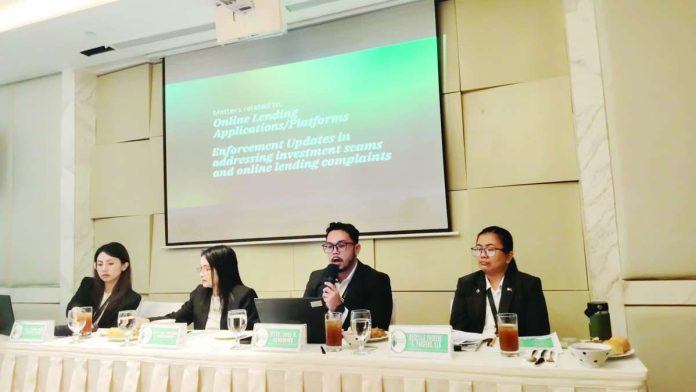
According to SEC-Iloilo Legal Counsel Atty. Joel Lenaming, many of the complaints involve aggressive collection tactics, including threats sent through text messages not only to borrowers but also to their relatives, friends and emergency contacts.
Victims are often individuals who unknowingly transact with unregistered lending companies and later become targets of harassment when collection issues arise, he added.
“We have a procedure for that. If the cases is ara sa jurisdiction ka Iloilo, ga-send kami showcause order. Pero ining mga lending apps gina-refer namon sa head office. And because may cybercrime siya nga element ga-coordinate kami with other agencies like the National Bureau of Investigation (NBI) kay ‘di namon makaya nga kami lang. Ang amon primary functions sa SEC, RRS kami – registrar,regulator, and supervisor,” Lenaming explained.
The SEC said some complaints involve threats of violence intended to pressure borrowers into making immediate payments.
“Nag transact ka online sa isa ka lending corporation, tapos nag bayad ka sang imo nga obligation. Sometimes gina ubra nila during due date, gina-harass ka, gina-textan ka, pati ang mga references sa contacts mo gina-message ka nga habuyan kuno granada balay mo, parents mo, para ikaw mag-pay. That is a violation,” Lenaming shared.
Lenaming stressed that such actions violate consumer protection laws and may constitute unlawful collection practices under Republic Act No. 11765, or the Financial Products and Services Consumer Protection Act.
He reminded borrowers to verify whether lending companies are registered with the SEC and possess a valid Certificate of Authority before entering into any loan agreement.
“It is critically important that individuals check our registry before committing to any lending agreement. A few moments spent verifying can ultimately save you from falling victim to scams,” Lenaming stressed.
To strengthen enforcement efforts, the SEC is also coordinating with the National Telecommunications Commission (NTC) to investigate harassment complaints and identify perpetrators.
“The risk is compounded by the anonymity of the perpetrators; they often use multiple phone numbers to evade detection,” Lenaming explained. “This creates significant difficulties in tracing them even for regulatory bodies.”
The SEC is also encouraging consumers to use its SEC Check App and official online platforms to verify the legitimacy of lending companies.
“We have adopted a slogan: ‘Maging wais, para hindi maging sawi’. It is vital that anyone considering borrowing money verifies the registration of the company with us. If there is any doubt, we urge you to visit our office for assistance,” Lenaming said.
The agency likewise urged victims of harassment to preserve screenshots, text messages and other evidence that could support investigations and legal action.
“Gathering evidence is essential to prove that harassment is orchestrated by a lending app. Our past cases have shown that without sufficient proof, complaints can be dismissed, so we encourage victims to document any threatening communications thoroughly,” Lenaming cautioned the public.
While warning the public against illegal lenders, the SEC also emphasized responsible borrowing and timely payment of obligations.
“Aside from being vigilant, someone must pay their obligations. Kon likawan mo ang imo obligations, ga-violate ka man, so as soon as possible, settle your loan obligations. Kon gina-harass ka, ang number gina refer namon sa National Telecommunications Commission, galing for example kon gin-block mo ang number, paano ka maka-engage sa ga-harass. Some gagamit thousands or hundreds of numbers, duda namon is daw gina-ready ang cellphones, damo nga SIM card to blast a text and call sa tawo nga may utang,” Lenaming revealed.
Lenaming also warned consumers to carefully review loan terms before accepting offers online.
“May example case nga sa pag-utang ‘ya online, sa Terms and Conditions nakabutang nga three months instalment to pay, pero pag pindot ya kag pag go through ka loan, nakabutang seven days to pay. Forced payment. Pag fifth day na gin-harass and gina buyayaw na siya. Ang mga scammer, gina design nila to force you to pay,” he added.
“It’s wise to gather evidence before you block it,” said Lenaming./PN