


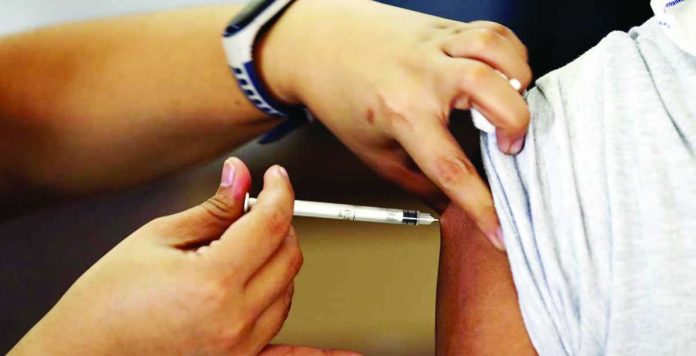
MANILA — Health experts called on working age Filipinos to get vaccinated as they noted a gap in immunization rates among adults compared to children and the elderly.
In a press conference, Philippine Foundation for Vaccination vice president Bryan Posadas stressed that vaccination “must be done as often as possible or based on schedule,” noting that flu shots, for example, should be done every year.
But Posadas, who is also a pharmacist, observed that many Filipinos stop getting vaccinated once they reach working age, and would only go back to doing so when they get older.
“We all know for a fact that our pediatricians have been doing so well in vaccinating our kids. But there is a huge gap when we talk about those who are adults. Once they enter the working class, they stop taking vaccines, and then, usually, they only take the vaccines again when they become senior citizens,” he said.
Posadas warned that low immunization rates among employees can lead to loss in productivity since those who are unvaccinated would be more prone to sickness and infections, causing them to miss work.
“Let’s get vaccinated and make sure it is not just the young we are protecting, but also us from the working class. We all know that we are the ones giving financial support to our families, so when we’re sick, it is not just us affected but also our families,” he said.
Aside from reducing the risk of illnesses such as influenza, pediatric infectious disease expert Dr. Lulu Bravo said vaccinations can also help prevent antibiotic resistance among Filipinos since they will not need to take any medications if they don’t get sick.
“One thing that antibiotics can make you do [is] suffer from more cost,” noted Bravo, who is also the executive director and convenor of RAISE (Raising Awareness on Influenza to Support Everyone) Coalition.
“But if you have less diseases because you have been vaccinated, you would really have [a] quality life, longevity, [and less] economic cost,” she said in the same briefing.
Posadas said that apart from the cost of the vaccines, the lack of access was also one of the reasons why working age Filipinos choose not to get vaccinated.
“Filipinos would want to get vaccinated closer to their home, which means it has to be accessible. It’s not just cost that’s the issue, it’s accessibility,” he said, citing a study by the Research Institute for Tropical Medicine.
To improve accessibility, Posadas said pharmacists should be given training in administering vaccines so that people would have more ways to get immunized.
He also called for better monitoring of adult vaccination rates, noting that current efforts to gather data are mostly focused on pediatric vaccination.
“It’s really rare for adults to get vaccinated, and that’s the reason why information for that is not being captured. That’s something that we hope we can get in the coming years as we progress,” he said. (Gillian Villanueva © Philippine Daily Inquirer)