



A DENTAL visit is easy to postpone when the teeth do not hurt.
But waiting for pain before seeing a dentist can allow cavities, gum disease and other oral problems to progress unnoticed.
For many people, a routine dental examination about every six months is a reasonable starting point. However, there is no single schedule that applies to everyone. The appropriate frequency depends on a person’s oral health, age, medical and dental history, risk factors and the advice of dentists.
Regular dental visits matter because dental problems do not always produce symptoms in their early stages. A cavity, for example, may develop without causing pain until it becomes more advanced. Gum disease can also progress gradually, with symptoms that may initially be easy to overlook.
During a dental examination, a dentist can inspect the teeth, gums and other areas of the mouth for signs of decay, gum inflammation, infection, abnormal wear and other problems.
Professional dental cleaning may also be recommended when plaque and hardened tartar cannot be adequately removed through ordinary brushing and interdental cleaning at home.
Regular visits therefore serve two purposes: prevention and early detection.
Is twice a year a rule? The familiar recommendation to visit the dentist every six months is not a universal rule.
People with healthy teeth and gums and a low risk of dental disease may require fewer visits, while those with existing oral-health problems may need more frequent monitoring.
Patients with gum disease, a history of repeated cavities, extensive dental restorations or orthodontic appliances may receive a schedule tailored to their circumstances.
Children also require regular dental care because their teeth and jaws are developing. Early dental visits can help establish good habits, identify problems and provide guidance to parents about brushing, fluoride, diet and other preventive measures.
Older adults may likewise require closer attention because changes in oral health, medications and other factors can affect saliva production, tooth stability and the condition of the gums.
Do not wait for pain. One of the biggest mistakes people can make is assuming that no pain means no dental problem.
Tooth decay may be relatively advanced before it causes significant discomfort. Similarly, early gum disease may produce bleeding or swelling that people dismiss as minor.
A dental examination can identify such problems earlier, when treatment may be simpler.
However, people should not wait for their next routine appointment when symptoms appear. Persistent toothache, facial swelling, unexplained bleeding, a broken tooth, dental trauma or signs of infection warrant prompt professional assessment.
Between visits to the dentists, personal oral hygiene cannot replace daily oral care. Brushing twice a day with fluoride toothpaste, cleaning between the teeth, limiting frequent sugary foods and drinks, and maintaining a balanced diet all contribute to oral health.
Regular dental appointments complement these habits by providing professional assessment and care.
Ultimately, the question is not simply how many times a year someone should sit in a dental chair. The more important question is what schedule provides appropriate preventive care for that individual.
For many people, six-monthly checkups are a useful benchmark. But a dentist may recommend a shorter or longer interval based on a patient’s needs.
The best dental schedule is therefore one that combines professional guidance with consistent care at home—and does not wait for a painful tooth to signal that something is wrong.
***
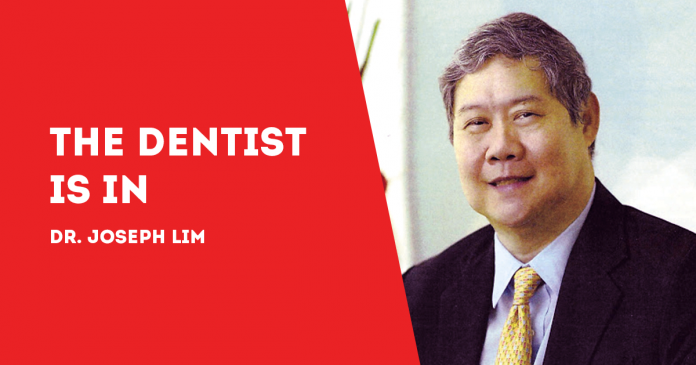
Dr. Joseph D. Lim, Ed. D., is the former Associate Dean of the College of Dentistry, University of the East; former Dean, College of Dentistry, National University; Past President and Honorary Fellow of the Asian Oral Implant Academy; Honorary Fellow of the Japan College of Oral Implantologists; Honorary Life Member of the Thai Association of Dental Implantology; and Founding Chairman of the Philippine College of Oral Implantologists. For questions on dental health, e-mail jdlim2008@gmail.com or text 0917-8591515.
***
Dr. Kenneth Lester Lim, BS-MMG, DDM, MSc-OI, graduated Doctor of Dental Medicine, University of the Philippines, College of Dentistry, Manila, 2011; Bachelor of Science in Marketing Management, De la Salle University, Manila, 2002; and Master of Science (MSc.) in Oral Implantology, Goethe University, Frankfurt, Germany, 2019. He is an Associate Professor; Fellow, International Congress of Oral Implantologists; and Fellow, Philippine College of Oral Implantologists. For questions on dental health, e-mail limdentalcenter@gmail.com./PN