


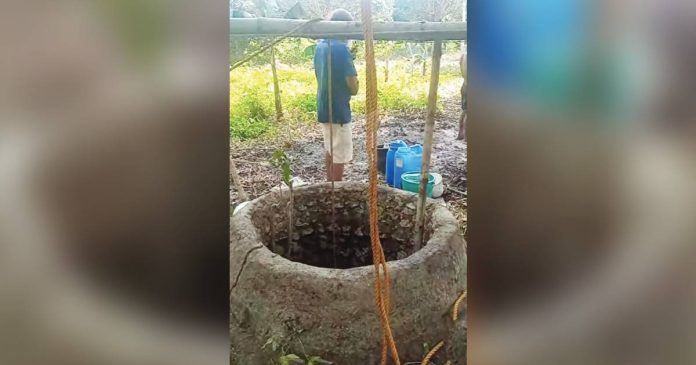
ILOILO — The Iloilo provincial government has begun preparing for a possible water shortage in several rural communities as the dry months approach, with authorities anticipating that wells — the main water source in many barangays — could run dry due to intense summer heat.
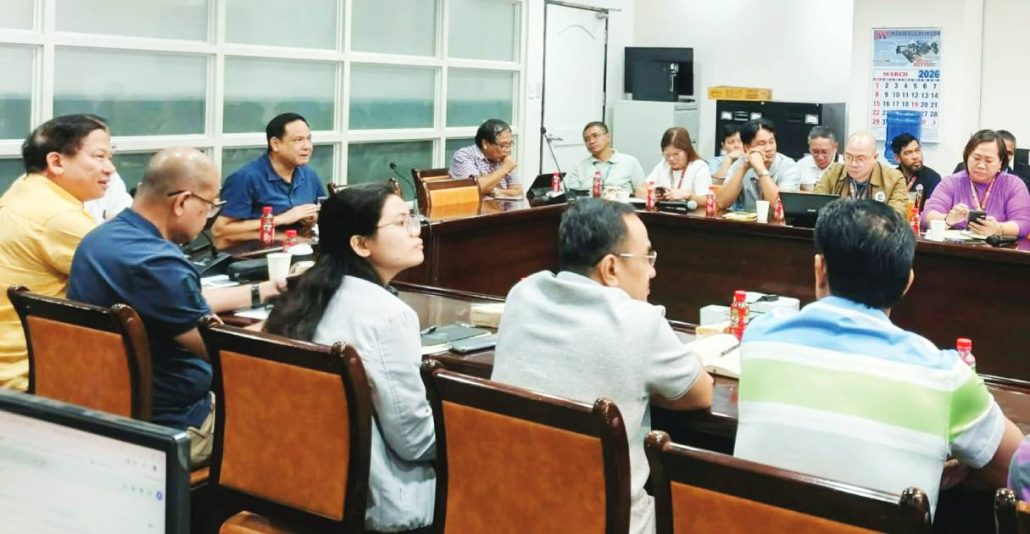
The matter was discussed during a recent Provincial Community Action Defense Cluster meeting, where officials discussed preparations for the expected effects of the dry season on water supply in the countryside.
“May El Niño or not, summer will be hot and ang tubig makulang gid ‘na, ma-diutay gid ‘na. So, amo na ang ginapreparahan naton with our Provincial Disaster Risk Reduction and Management Office (PDRRMO),” said Gov. Arthur Defensor Jr.
The PDRRMO is already identifying municipalities and barangays that may experience water shortages for daily household needs.
To mitigate the impact, Defensor said logistics such as water trucks and other equipment are being prepared so that neighboring barangays or municipalities can share water supply when wells run dry.
“May mga barangay nga nagasag-ob. Indi ‘na damo pero may barangay kita nga nagahubas ang tasok kon tag-init,” he added.
Iloilo Province has 1,721 barangays scattered in 42 towns and one component city.
Aside from logistical support, the provincial government is also ready to extend financial assistance to municipalities or barangays that may be severely affected by water shortages during the summer season.
The Philippine Atmospheric, Geophysical and Astronomical Services Administration (PAGASA) reported this week that the La Niña weather phenomenon has ended, signaling a return to neutral climate conditions in the Pacific.
PAGASA said sea surface temperatures in the tropical Pacific indicate the absence of both El Niño and La Niña, with climate models suggesting that these neutral conditions could persist through the June-July-August 2026 season.
El Niño and La Niña are opposite phases of the El Niño–Southern Oscillation (ENSO), a naturally occurring climate pattern driven by changes in wind speed, air pressure, and sea surface temperatures across the equatorial Pacific Ocean.
El Niño is characterized by unusually warm ocean temperatures in the central and eastern Pacific, which typically bring hotter and drier conditions to the Philippines, often leading to drought, reduced rainfall, and water shortages.
In contrast, La Niña occurs when sea surface temperatures become cooler than normal, increasing the likelihood of above-normal rainfall and stronger tropical cyclones, which can result in flooding and landslides.
The brief and weak La Niña episode began in December 2025 and contributed to the formation of storms Wilma, Ada, and Basyang.
Despite the shift to neutral conditions, PAGASA warned that rain-bearing weather systems may still bring occasional heavy rainfall that could trigger flash floods and landslides in vulnerable areas./PN
