


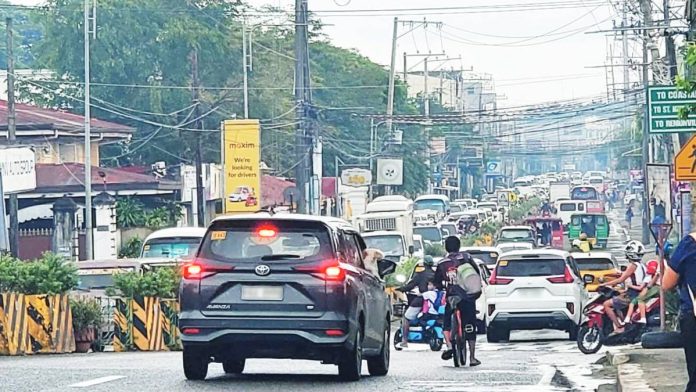
ILOILO City — Confronted by worsening congestion in major thoroughfares, the city government could adopt a data-driven traffic management plan targeting 38 identified choke points across the metropolis.
The proposal — crafted after months of field studies and traffic pattern analysis — seeks to introduce site-specific solutions to decongest critical intersections and improve overall road safety.
It was presented to local officials, transport operators, and national agencies by traffic consultant Raymund Jarobilla, who emphasized that the city must now move from piecemeal fixes to long-term, coordinated action.

“We are looking at sustainable, data-driven solutions,” Jarobilla said. “Our goal is not just to decongest roads but to create a long-term traffic management framework that can adapt to Iloilo City’s rapid development. The 38 identified choke points are areas where interventions are urgently needed.”
Jarobilla said their study analyzed vehicle buildup patterns, road geometry, and pedestrian behavior to pinpoint problem zones.
“Each area has a different cause of congestion — some are due to high pedestrian crossings, some to roadside parking, and others to inefficient intersections. So the approach for each site will vary,” he explained.
Among the busiest areas marked for priority interventions are Oñate and R. Mapa Streets, Quintin Salas, Tagbak-Metropolis, Gen. Luna, Infante, Hechanova-Rizal, and the Central and Terminal Markets.
The remaining 31 locations cover the districts of Jaro, La Paz, Molo, Mandurriao, Arevalo, and the City Proper.
To ensure sustainable results, the plan proposes to pair new traffic schemes with infrastructure improvements and stronger inter-agency coordination.
“Traffic management isn’t just about enforcement — it’s about design, discipline, and coordination,” Jarobilla said. “We need synchronized efforts among TTMO, the City Engineer’s Office, and DPWH to make sure physical improvements support policy changes.”
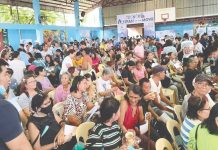
Representatives from transport cooperatives, the Association of Taxi Operators, the Department of Public Works and Highways (DPWH), the City Engineer’s Office, the Traffic and Transportation Management Office (TTMO), and the City Council’s Committee on Transportation chaired by Councilor Atty. Sedfrey Cabaluna attended the consultation to provide technical and policy input.
City officials said an intensive information campaign will precede the implementation of any new scheme to ensure public compliance. The plan still awaits City Council approval before rollout.
Jarobilla stressed that easing traffic congestion will have far-reaching economic and social benefits.
“When travel becomes easier, it boosts productivity, encourages tourism, and attracts more investors. A well-managed road network benefits everyone,” he said./PN