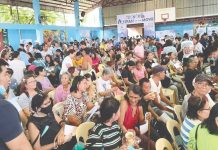



ILOILO City — Iloilo City’s redeveloped public markets are carving out a new role beyond traditional centers of commerce, emerging as potential tourism destinations and models for public-market modernization as government, private and international groups increasingly come to the city to study their transformation.
At least 23 groups visited the Iloilo Terminal Market and Iloilo Central Public Market from Oct. 20, 2025 to Aug. 14, 2026 to benchmark their management and redevelopment — a growing interest that city officials see as an opportunity to position the markets as both development showcases and attractions.
“This is an indication that people are interested in what we are doing with our markets,” Local Economic Enterprise Office (LEEO) head Maricel Mabaquiao said.
The visitors cut across local government units (LGUs), national government agencies, private organizations, development groups and international organizations, suggesting that interest in Iloilo’s market redevelopment has extended well beyond the city.
“Different sectors are coming here not only LGUs but also national government agencies, private groups and even international organizations. They want to see how our markets are being managed and how the redevelopment is being implemented,” Mabaquiao said.
Among the national government agencies that conducted visits were the Department of Tourism Central Office and Western Visayas office, Public-Private Partnership Center of the Philippines, and Department of the Interior and Local Government Region VI.
LGUs from across the country also came to Iloilo, including Pinamalayan in Oriental Mindoro, Daraga in Albay, Lapu-Lapu City, Mandaue City, Iligan City and Baguio City.
International and private-sector visitors included an ASEAN working group committee, French cruise company Compagnie du Ponant, Philippine Daily Inquirer and Baguio Business Club.
The IRANUN Development Council and FIR Investors were likewise among the development and investment groups that visited.
But Mabaquiao said the growing attention could produce something beyond benchmarking — the development of market tourism, in which public markets themselves become part of a destination’s visitor experience.
“Markets are no longer just places where you buy and sell. They can also become destinations,” Mabaquiao said.
She said Iloilo’s markets could offer visitors a closer encounter with Ilonggo food, products, culture and everyday community life.
“This is also part of market tourism. When people visit Iloilo City, they can also visit our markets, experience the products, see how our vendors operate and learn more about our local culture,” she said.
The Iloilo Terminal Market and Iloilo Central Public Market were redeveloped through a public-private partnership (PPP) with SM Prime Holdings, transforming two of the city’s major traditional markets into modern public-market facilities.
The redevelopment is now drawing attention not only to the physical transformation of the facilities but also to Iloilo City’s system of managing them and balancing the interests of vendors, consumers and the city government.
“We want to show that a public market can be modern, organized and clean while still maintaining the character of a traditional market,” Mabaquiao said.
She stressed that benchmarking is also a two-way process that allows Iloilo City to learn from the experience and practices of other local governments.
“We are also happy because benchmarking is not just about them coming here to look at our markets. It is also an opportunity for us to learn from them and see what other cities are doing,” she said.
The influx of benchmarking groups, Mabaquiao said, reflects a broader change in how public markets are viewed — from simple trading centers into economic, cultural and tourism assets.
“People are now looking at markets differently. They are looking at the system, the facilities, the vendors and how the market contributes to the economy and tourism of a city,” she said.
With 23 groups visiting in roughly 10 months, Iloilo City now has an opportunity to strengthen its position as a reference point for public-market modernization while developing the markets themselves as another component of the city’s tourism industry.
“If they are coming here to benchmark, it means there is something in Iloilo City that they want to learn from. We should continue improving so that we can sustain that interest,” Mabaquiao said./PN