


![“The Pharmally case... there are 46 respondents [in our complaint], kaya medyo matagal. And many of them have become invisible. Para bang they're trying to evade the jurisdiction of this body,” says Ombudsman Jesus Crispin Remulla.](https://www.panaynews.net/wp-content/uploads/2026/10/plunder_copy_resized_resized-218x150.jpg "Ombudsman presses P11-B Pharmally plunder case But 23 respondents missing— Remulla")
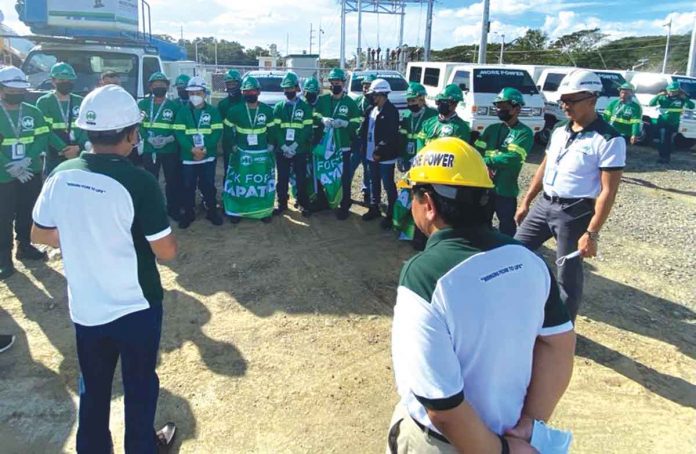
ILOILO City – MORE Electric and Power Corp. (MORE Power) has sent a team to Negros Island to help Negros Occidental Electric Cooperative (NOCECO) restore power in the southern part of the province.
Southern Negros – the franchise area of NOCECO covering 13 towns, four cities and 308 barangays – took a beating from super typhoon “Odette” on Dec. 16.
According to MORE Power president Roel Castro, 20 of their personnel have joined Task Force Kapatid organized by the Department of Energy (DOE), National Electrification Administration (NEA) and Philippine Rural Electric Cooperatives Association, Inc. (PHILRECA) to help NOCECO.
These 20 personnel are composed of engineers, line warriors and customer care staff. They have brought with them the necessary tools and equipment and are prepared to stay in southern Negros for the rest of the holiday season or until the job is done.
“This is indeed a season for helping and spreading the love of Christ. MORE Power is glad and very much honored to be a part of this worthy endeavor,” said Castro.
MORE Power is the sole power distributor in Iloilo City. It completely restored power in the metro in record time on Saturday, just a day after “Odette” struck.
MORE Power then offered to help Negros Island through DOE, NEA and PHILRECA.
Castro said the augmentation is part of MORE Power’s corporate social responsibility.
On Monday, Dec. 20, President Rodrigo Duterte inspected southern Negros. Cabinet Secretary Karlo Nograles said the President directed the DOE to restore the supply of electricity in areas ravaged by the typhoon as quickly as possible.
In Iloilo City, MORE Power was able to achieve 100 percent restoration of the metro’s energy supply in less than 24 hours after Odette struck and damaged a total of 123 poles, electricity lines and laterals.
Castro, by 12 noon on Dec. 18, declared MORE Power’s operation back to normal. Sub-transmission, feeders, primary and majority of the secondary lines and laterals were cleared and restored.
“Inuna natin ang sub-transmission because these are the lines that feed to the substations. After na-clear yun, ang substations natin nag-cooperate, walang problema. From the substations, we go to the feeder, that is why may restoration na kaagad of operation. After feeder, we go to the primary lines then to the secondary lines because ‘yan na ang papunta talaga sa consumers,” Castro recalled on how they strategized their fast restoration.
By weekend, the remaining work is mostly on the secondary lines connecting to the consumers’ residential lines.
Iloilo City’s Mayor Jerry Treñas commended Castro and his MORE Power team.
“The performance of MORE Power is unprecedented. I am very grateful in behalf of the great people of Iloilo City,” Treñas said.
During past calamities under the previous power distribution utility, Treñas said it took weeks – even months – for many areas of the city to be energized.
Castro said he was humbled by Treñas’ commendation. He gave credit to MORE Power’s field personnel, describing them as “really dedicated and very professional in carrying out the job.”
He also emphasized that the speedy and successful restoration work was a product of preparation and contingency planning before “Odette” hit the city.
Part of the preparation was the conduct of simulation exercises to identify possible weak points, Castro said.
The prepositioning of logistics and materials needed in the recovery and restoration efforts also contributed to the smooth flow of operations, he added, as well as the shifting of duties of personnel.
Castro also hailed MORE Power’s engineers who provided the leadership during the recovery works.
Other distribution utilities in the region are still struggling to restore the electric supply of their consumers./PN