

ILOILO City – The city government may declare a “state of impending calamity”. Residents have started complaining about water shortage.
This is “due to (the) El Niño (phenomenon)”, according to Mayor Jerry P. Treñas.
El Niño is a natural, cyclical climate pattern that causes hot weather and reduced rainfall. Compounded with the effects of global warming, it could trigger localized drought.
Yesterday Treñas discussed with concerned offices and agencies their strategies and plans to address water shortage.
“We are looking at declaring a state of impending calamity due to El Niño. There are complaints about the scarcity of water as informed by Vice Mayor (Jeffrey) Ganzon,” said Treñas.
Among those Treñas convened were the city’s major water distributor, Metro Pacific Iloilo Water (MPIW); Metro Iloilo Water District (MIWD); bulk water suppliers Metro Iloilo Bulk Water and Balibago Waterways; city councilors, and district representatives.
MPIW previously identified 33 critical areas in seven districts. These were the following:
* Molo – Sitio Bukid-bukid in Barangay San Pedro and barangays East Baluarte, Infante, South Fundidor, and Compania
* Arevalo – barangays Bonifacio, Arroyo, and Quezon
* City Proper – General Luna, Delgado, Ledesma, Quezon, Valeria, Jalandoni, and Fuentes streets
* La Paz – barangays Jereos, Caingin, Gustilo, Lopez Jaena Norte, and Lopez Jaena Sur
* Lapuz – barangays Alalasan, Jalandoni Estate and Lapuz Norte
* Jaro – barangays Simon Ledesma, Democracia, Our Lady of Lourdes, Montinola, MH Del Pilar, and Dungon A
* Mandurriao – barangays Dungon B, Dungon C, Bolilao, and Navais
Last month, the Philippine Atmospheric, Geophysical and Astronomical Services Administration (PAGASA) announced the start of El Niño, which will persist until the first quarter of 2024.
“May impact gid ang El Niño sa mga bulk water suppliers, may reduced production, so sila (33 areas) ang possible nga indi malab-otan sang tubig. Once indi sila malab-otan amo gid na ang amon preparahan para makapa-deliver kami through tankers,” said Engr. Rothel John Chavez, MPIW Water Network Department head, in previous interview.
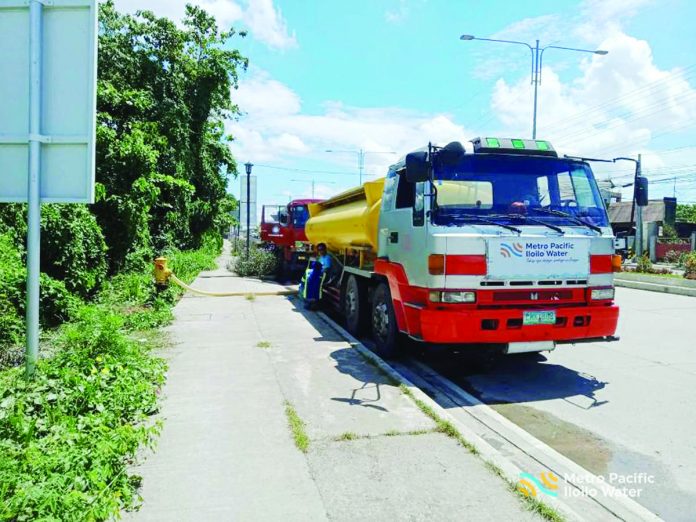
In May, MPIW presented its El Niño contingency plan to Treñas. Chavez said part of their plan is for more water tankers to deliver and serve areas that could no longer be reached by water supply.
They were also implementing network system adjustments to manage losses, prompt repair of pipe leaks, supply scheduling, and intensity campaign of recovering non-revenue water in the system due to leakage, water pilferage and regulated use of fire hydrants.
“Bilang sa distribution side, ang amon pwede nga ma-control amo ang amon nga network. So kinanglan namon i-strengthen ang leak repair program and ang amon system adjustment para ma-maximize ang available nga tubig para ma-ensure nga may maabot nga tubig sa mga pumoluyo,” Chavez added.
He also noted that they were closely coordinating with their bulk water suppliers to ensure that they are also doing their shares.
“Our bulk water suppliers are also finding ways to improve their productions like sourcing out from new wells,” Chavez said.
With the state weather bureau forecasting the country will experience a mild El Niño phenomenon, Chavez stressed it is better to be prepared./PN