


![“The Pharmally case... there are 46 respondents [in our complaint], kaya medyo matagal. And many of them have become invisible. Para bang they're trying to evade the jurisdiction of this body,” says Ombudsman Jesus Crispin Remulla.](https://www.panaynews.net/wp-content/uploads/2026/10/plunder_copy_resized_resized-218x150.jpg "Ombudsman presses P11-B Pharmally plunder case But 23 respondents missing— Remulla")
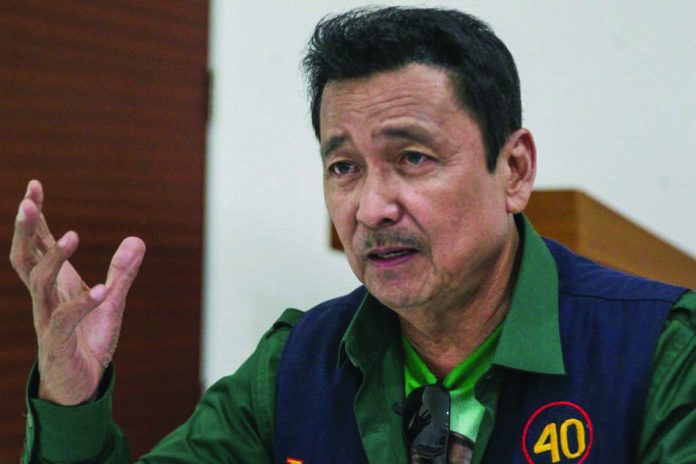
Senator Lito Lapid maintained that the use of renewable energy would address brownouts now being experienced in Negros Occidental, Panay Island, and other areas in the country.
Lapid said that unlike fossil fuels, some energy sources are renewable, and do not emit greenhouse gases. These clean and sustainable alternative energy solutions include solar energy, hydropower, wind energy, geothermal energy, and biomass energy.
Because of the high heat index during summer, the senator said sunlight can be harvested or collected through solar panels that will supply the power grid in a town or province.
“After all, as a tropical country, the Philippines is lucky because of the abundance of sunlight. There is a need for more private companies to invest in the solar industry to meet the shortage of electricity supply,” Lapid said.
During a visit to Bacolod City and Himamaylan, Negros Occidental, Lapid learned that there are frequent brownouts in Western Visayas due to the lack of electricity supply by the National Grid Corporation of the Philippines (NGCP).
“I hope that the brownouts that happened in Iloilo from January to March 2024 will not happen again. If there is no electricity supply, our countrymen will have no business, no jobs, and no income. That is why sufficient power supply is important for the stability and development of the country,” Lapid said.
Last Monday, April 8, President Bongbong Marcos, Jr. inaugurated the Cebu-Negros-Panay Backbone Project Stage 3 (CNP3) in Brgy. Mansilgan, Bacolod City which is expected to address brownouts in Western Visayas.
“We support President BBM’s move to solve the electricity shortage, not only here in Negros but in the entire Philippines. His initiative to further develop and strengthen the use of renewable energy sources amid the El Nino phenomenon is good. Renewable energy generators should also be given incentives,” Lapid added.
Congressman Dino Yulo and Negros Occidental Governor Eugenio Jose Lacson also supported Lapid’s call to boost the use of renewable energy. They assured that they will welcome companies in the province that want to invest in power generation.
The inaugurated CNP Phase 3 project has an overall capacity of 3,800 megaVolt Amperes (MVA). It consists of 442 circuit kilometers of new transmission lines, 98 circuit kilometers of submarine cables, and the construction of six new substations in Western Visayas.
Lapid also called on colleagues to hasten the passage of Senate Bill No. 2138 which seeks to promote the use of renewable energy technology in homes.
According to the bill, which he filed last year, Republic Act No. 9513 declared that it is the policy of the state to “Increase the utilization of renewable energy by institutionalizing the development of national and local capabilities in the use of renewable energy systems and promoting its efficient and cost-effective commercial application by providing fiscal and nonfinancial incentives.
The net metering program allows and encourages individuals or businesses to generate their own renewable energy and feed the excess electricity back into the grid, receiving credits or payments for the energy they produce.
It encourages investment as it provides an incentive for individuals and businesses to invest in renewable energy technologies such as solar panels or wind turbines. As more people invest in renewable energy technologies, the amount of renewable energy generated will increase, reducing the reliance on fossil fuels and decreasing greenhouse gas emissions.
“Our government has set targets to increase the amount of renewable energy in our energy mix. Net metering can help to achieve these targets by encouraging the production of renewable energy at a local level,” he added. (END)