



[av_one_full first min_height=” vertical_alignment=” space=” custom_margin=” margin=’0px’ padding=’0px’ border=” border_color=” radius=’0px’ background_color=” src=” background_position=’top left’ background_repeat=’no-repeat’ animation=”]
[av_heading heading=’Local network hopes to derail TRAIN’ tag=’h3′ style=’blockquote modern-quote’ size=” subheading_active=’subheading_below’ subheading_size=’15’ padding=’10’ color=” custom_font=” av-medium-font-size-title=” av-small-font-size-title=” av-mini-font-size-title=” av-medium-font-size=” av-small-font-size=” av-mini-font-size=” admin_preview_bg=”][/av_heading]
[av_textblock size=” font_color=” color=” av-medium-font-size=” av-small-font-size=” av-mini-font-size=” admin_preview_bg=”]
January 19, 2018
[/av_textblock]
[av_textblock size=” font_color=” color=” av-medium-font-size=” av-small-font-size=” av-mini-font-size=” admin_preview_bg=”]
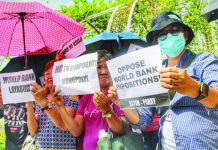
ILOILO City – Various organizations in this city formed a broad network to oppose what they called a pro-rich but anti-poor tax reform law of the Duterte administration.
According to Scrap TRAIN Network, the new tax reform law is geared to fatten business tycoons’ pockets while emptying the poor’s.
“Business oligarchs will be benefitting largely from managing and profiting infrastructure projects under the Build, Build, Build program such as superhighways, subways, mega dams, and airports,” said Elmer Forro, secretary general of Bagong Alyansang Makabayan – Panay, lead convener of the network.
The government aims to collect P1.3 trillion from TRAIN and this would be used to finance infrastructure projects.
“But these projects, as what we have experienced, shall be taken over by private companies that will turn them into businesses. This will deny the poor affordable access to these projects,” said Forro.
TRAIN will lower personal income taxes of professionals and uniformed officers in the government. Forro, however, said this does not translate to savings.
According to party-list Bayan Muna, a family of five will have an additional P2,442.75 expenses monthly due to direct and indirect impacts of TRAIN.
Items previously without excise tax are now taxed under TRAIN. Diesel will have an additional P2.50 per liter, sugar-sweetened beverages such as softdrinks P6 per liter, and concentrated juices at P10 per liter.
Meanwhile, local shipping, housing, electric transmissions, and cooperative – previously untaxed – are now added with 12-percent value-added tax.
Gasoline, on the other hand, will have an increase of from P4 to P7 due to the excise tax.
“Basic logic would tell us that price increases in petroleum products will have a domino effect on the prices of basic commodities. It is being felt right now by ordinary Filipinos, especially the poor whose wages remain low and meager. That makes Duterte’s TRAIN anti-poor,” said Forro.
The network will hold a series of information campaigns, lobbying efforts and mobilizations to push for the scrapping of TRAIN.
“Instead of taxing the poor, President Duterte should run after these billionaires and corporations who still have unpaid taxes of P400 billion according to independent think tank IBON Foundation,” said Forro.
A “progressive tax system” should be implemented, the Scrap TRAIN Network suggested, by taxing those who earn more, lowering the taxes on consumers goods, scrapping the VAT, and increasing the minimum wage to P750 per day for the private sector and P16,000 per month for the government sector./PN
[/av_textblock]
[/av_one_full]