

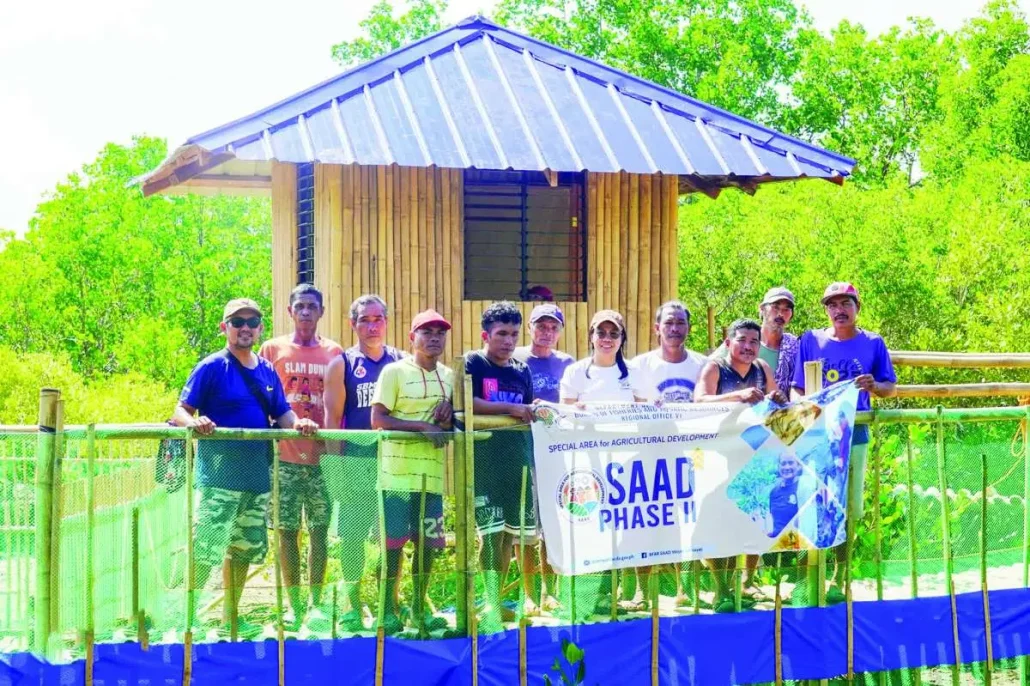
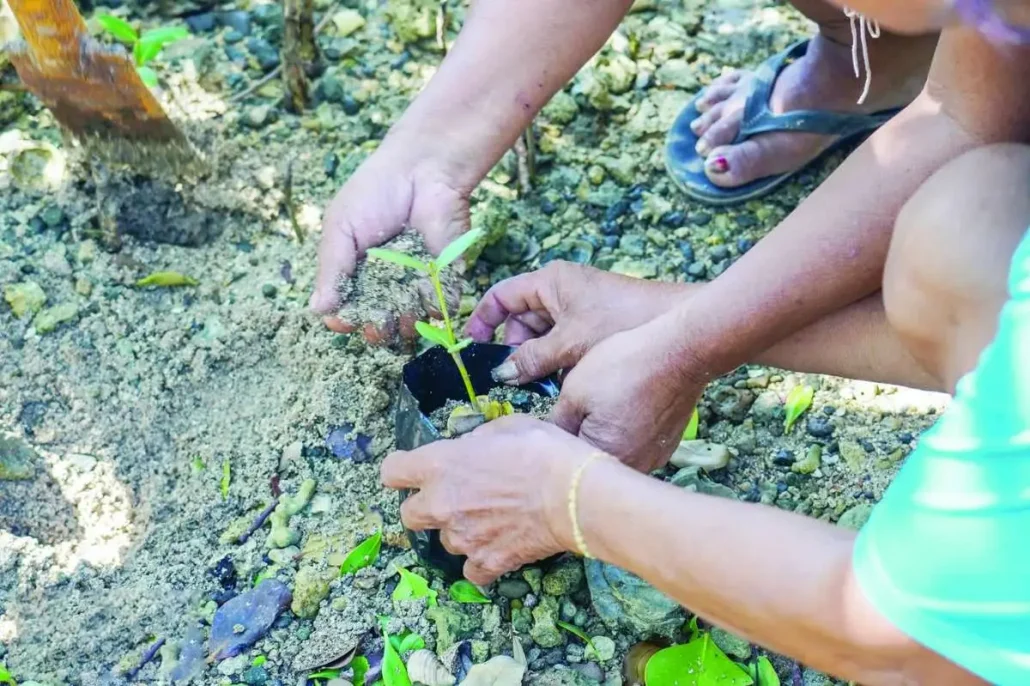
CONCEPCION, Iloilo — A community-run mangrove nursery will soon rise in Barangay Igbon here, providing a local source of seedlings for coastal rehabilitation while opening new livelihood opportunities for fisherfolk in one of northern Iloilo’s coastal communities.
The Barangay Igbon Kasagan Association (BIGKAS), with support from the Bureau of Fisheries and Aquatic Resources (BFAR) under its Special Area for Agricultural Development (SAAD) Phase II Program, is preparing to establish the nursery as part of broader efforts to strengthen coastal protection and develop community-based enterprises.
The project gained momentum following a Mangrove Nursery Management and Operation Training Workshop on Sept. 23 and 24, which trained 15 BIGKAS members in the technical skills needed to establish, operate and sustain the facility.
The initiative brings together the Concepcion municipal government and conservation partners Zoological Society of London (ZSL) and Monterey Bay Aquarium (MBA), combining mangrove conservation with livelihood development.
During the training, Rona Joy A. Loma, ZSL Mangrove Program coordinator, discussed mangrove biology and taxonomy and taught participants how to identify native mangrove species.
Cesar Tabada, meanwhile, tackled mangrove conservation and the legal frameworks protecting mangrove ecosystems.
Participants later applied the lessons in field exercises covering species identification, sustainable collection of propagules and seeds, and proper handling, potting and care of seedlings to improve their survival rates.
The association also began drawing up a Mangrove Rehabilitation Plan that will serve as its roadmap for establishing and maintaining the nursery.
Facilitator Mark Rufino guided BIGKAS members in developing the plan, which identifies operational steps, responsibilities and timelines for the project.
Rufino stressed that mangrove rehabilitation requires systematic management to ensure that restored areas survive and continue protecting coastal communities over the long term.
“Mangroves have a lot of uses like coastal protection. Amo na importante may ara kita plano sa pag-manage sang aton mangrove areas. Tipigan natun para sa mga masunod,” Rufino said.
BIGKAS members are also scheduled to visit an established mangrove nursery in Barangay Pedada, Ajuy, Iloilo, where they will study practices that could be adopted for their own nursery and the ongoing Parade Mangrove Ecopark project.
Beyond supplying seedlings for rehabilitation, the Igbon nursery is envisioned as another potential source of income for association members.
BIGKAS president Celso Arinaza said establishing a dependable supply of mangrove seedlings in the barangay could create economic opportunities while supporting conservation projects.
“Kun madamo ang tinamnan nga seedlings, indi ma-sayang ang inyo pangabudlay kay si Sir Mark makatudlo na ina nga may supply na sang mangrove diri sa Barangay Igbon,” Arinaza said.
The nursery forms part of BIGKAS’ expanding portfolio of community-based livelihood and environmental projects.
These include aquasilviculture and ecotourism development through the Parade Mangrove Ecopark, fishery store operations, pre-processing and trading facilities, cooperative formation, market linkages and a lying-in hatchery.
The association is also pursuing partnerships with government agencies and non-government organizations to expand its livelihood and conservation activities.
The BFAR SAAD Phase II Program targets vulnerable fisherfolk communities through livelihood interventions designed to establish sustainable community-based fishery enterprises.
The program also seeks to improve household incomes, strengthen food security and promote inclusive economic development in priority coastal communities across the country./PN