

MANILA — President Ferdinand Marcos Jr. rolled out a sweeping set of higher-education reforms anchored on merit-based scholarships, expanded information access, and a new national data platform —moves the administration said will widen college access, align training with workforce needs, and improve transparency across the sector.
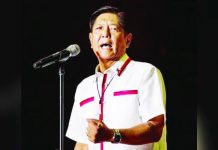
The reforms were unveiled during the launch of the PBBM-GABAY ng Bayan programs at the Ilocos Norte Centennial Arena in Laoag City. In a message delivered by Ilocos Norte 1st District’s Cong. Ferdinand Alexander “Sandro” Marcos on January 23, the President said the initiatives translate inclusive education into “measurable, concrete, and sustained commitments.”
“When we speak of inclusive education, we speak in measurable, concrete, and sustained commitments to bring opportunities and hope closer to our learners and every family,” Marcos said.
“We are reminded that education is a right that must reach every Filipino, no matter how far, how poor, how marginalized, or how difficult,” he added.
At the center of the package is the Bagong Pilipinas Merit Scholarship Program (BPMSP), formally launched through a joint memorandum circular signed by the Commission on Higher Education (CHED) and the Technical Education and Skills Development Authority (TESDA).
Under the BPMSP, the top five graduates of every senior high school nationwide—public, private, and science high schools included—along with qualified TESDA certificate holders, will be eligible for government scholarships. Awardees may enroll in degree or technical-vocational programs at high-performing institutions, particularly in fields deemed critical to national workforce requirements.
Marcos said the scholarship design is meant to directly support development priorities and close skills gaps in key industries.
“But scholarships alone will not solve every barrier. We know that for many Filipino families, the first obstacle is access. And often, access begins with something basic – information,” he said.
To bridge that gap, the administration also launched Project Patuloy na Edukasyon, Patuloy na Pag-Ahon (Project PEPA), a nationwide information drive to help families—especially beneficiaries of the Pantawid Pamilyang Pilipino Program (4Ps)—navigate education benefits. The project targets about 490,000 senior high school graduates from 4Ps households.
Another initiative unveiled was CHED-TANAW, a digital platform that consolidates nationwide data on higher education institutions, student enrollment, scholarship offerings, and graduate outcomes. Marcos said the tool will help students make informed choices while strengthening accountability in the sector.
“In an age where data shapes decisions and drives accountability, we developed CHED-TANAW, the Commission’s National Higher Education Data Visualization Platform,” he said. “It strengthens transparency, it supports better policymaking, and through interactive maps and official data, it guides students towards legitimate and recognized institutions across the Philippines.”
The President also recognized teachers—particularly those promoted under the Expanded Career Progression program—for their role in shaping future generations, urging students to seize the new opportunities and calling on schools and government agencies to work together.
“Together, let us build a Bagong Pilipinas where education is a sturdy foundation for stronger families, a more capable workforce, and a more progressive nation,” Marcos said./PN