


ILOILO City – El Niño tests more than the amount of water available in reservoirs, rivers and aquifers. It tests whether water systems can endure prolonged dry conditions and continue water flowing reliably to communities even as available supply comes under pressure.
For Metro Pacific Water (MPW), a subsidiary of Metro Pacific Investments Corp. (MPIC), resilience means preparing before scarcity is felt at the household level.
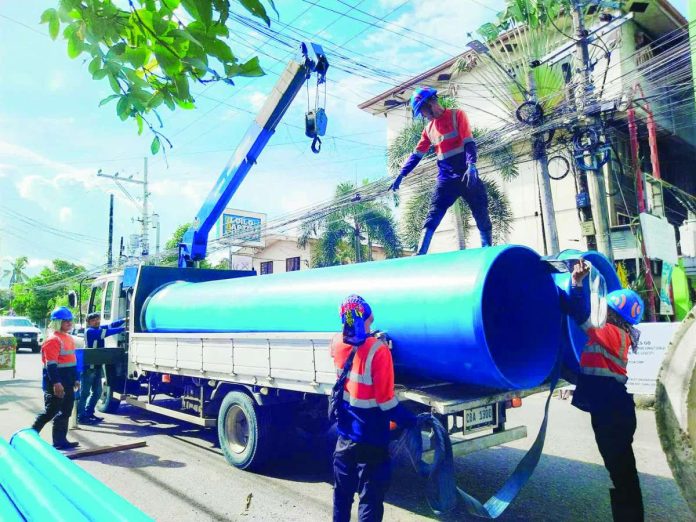
Now marking its 15th year, MPW serves approximately 221,000 households across Iloilo, Dumaguete and San Jose del Monte, Bulacan. Its El Niño preparations form part of a broader P23-billion investment program over the next five years covering new water sources, treatment and distribution infrastructure, network rehabilitation and non-revenue water reduction.
“Water security is economic security,” said MPW’s President and Chief Executive Officer Andrew B. Pangilinan, underscoring the need to build infrastructure that communities can depend on for the next generation.
That resilience strategy is taking different forms in MPW’s service areas.
In Iloilo, Metro Pacific Iloilo Water (MPIW) is targeting up to 25 million liters per day (MLD) of additional and recovered water. Measures include 5 MLD from proposed modular desalination facilities, around 10 MLD through pipe replacement and non-revenue water reduction activities, and up to another 10 MLD from additional bulk water supply, rehabilitation of existing wells and other sources.
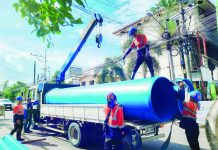
Operational readiness is also being strengthened through 36 water tankers, including 20 currently available and 16 additional units for deployment if needed, nine refilling stations, and 24/7 supply monitoring, leak detection and repair.
Beyond immediate measures, MPW is developing longer-term supply diversification in Iloilo, including a 66.5-MLD desalination facility and the proposed 86-MLD Jalaur Water Treatment Project.
In Dumaguete, Metro Dumaguete Water (MDW) is protecting and augmenting its groundwater resources. MDW currently operates 22 deep wells and is preparing to construct its 23rd pumping station, expected to add another 3 MLD when operational in 2027. Current monitoring continues to indicate healthy groundwater levels, but the utility is strengthening its system ahead of prolonged dry conditions.
MDW is also upgrading pipelines, protecting the watershed in Barangay Lunga, Valencia, and promoting responsible household water use to help preserve groundwater availability.
In San Jose del Monte, where MPW operates on an interim basis through Metro Pacific Bulacan Water (MPBW), the focus is on rehabilitating an already stressed system while preparing for additional pressure from El Niño.
MPBW has reactivated three deep wells that added 1.5 MLD, while continuing pumping-station rehabilitation, leak repair and non-revenue water reduction activities. It is also advancing the 3.4-kilometer Tanawin to Igay pipeline, which can transfer additional 15 MLD of treated water and benefit around 15,000 households once operational.
Across these communities, the principle is the same: water resilience cannot begin when faucets run dry.
It requires investing early, diversifying sources, recovering every possible liter and building systems capable of adapting to increasingly difficult climate conditions.
For MPW, preparing for El Niño is not simply about surviving the next dry season. It is about building water systems resilient enough for the decades ahead./PN