

MANILA — President Ferdinand “Bongbong” Marcos Jr. on Wednesday assured the public that the country’s food supply remains stable and sufficient, urging Filipinos not to engage in panic buying or hoarding despite uncertainties caused by global tensions.
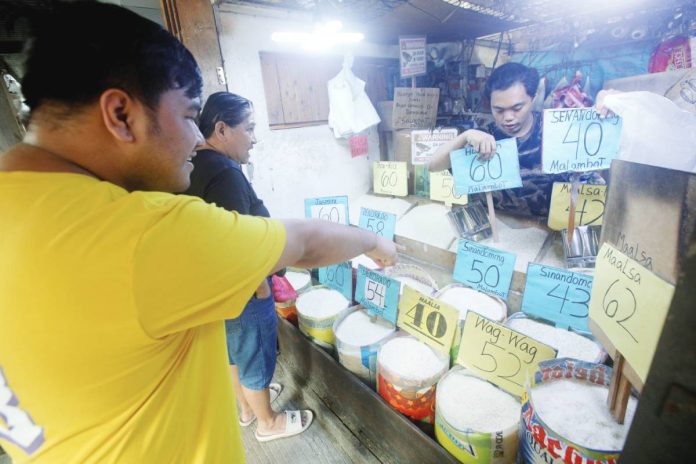
Speaking to reporters in San Juan City, Marcos emphasized that supply levels for rice and other basic goods remain steady, with prices largely under control as authorities continue close monitoring of markets nationwide.
“Sa Pilipinas, normal ang ating mga presyuhan, ang supply natin ng pagkain, ng bigas, lahat ng mga basic goods,” Marcos said.
“Kaya’t ‘yung ating mga kababayan, sinasabi natin hindi naman kailangan mag-hoarding. Hindi tayo nagkukulang sa food supply,” he added.
The President said government agencies are actively inspecting markets to ensure compliance with suggested retail prices and price ceilings, stressing that maintaining stability requires constant coordination between regulators and industry stakeholders.
“We’ll just keep working to make sure that it stays that way para naman ‘yung kabuhayan ng ating mga kababayan ay hindi maapektuhan,” Marcos said.
Trade Secretary Ma. Cristina Roque echoed the President’s assurance, reporting adequate inventories in groceries and supermarkets and strong adherence by manufacturers to price stability commitments.
“Yes, compliance is really good. Actually, I just had a meeting with the manufacturers in the industries and they assured that no price increase for basic necessities and prime commodities for the next 30 days,” Roque said, while noting that global developments could affect conditions beyond that period.
Agriculture Secretary Francisco Tiu Laurel Jr., meanwhile, said farm product prices remain stable for now but warned of possible supply pressures in the coming months, particularly due to rising fuel costs that could affect fishing operations.
“But when the lean season comes and the fuel prices go up, our fishermen won’t be able to fish, if the fuel prices go up by May or June. There might be shortage,” he said.
“If our fishermen won’t be able to fish because of the high fuel prices, and they will just get lost, the solution there is again, unfortunately, importation, if we can get supplies.”
He added that sourcing imports may also pose challenges as other countries could face similar supply constraints./PN