



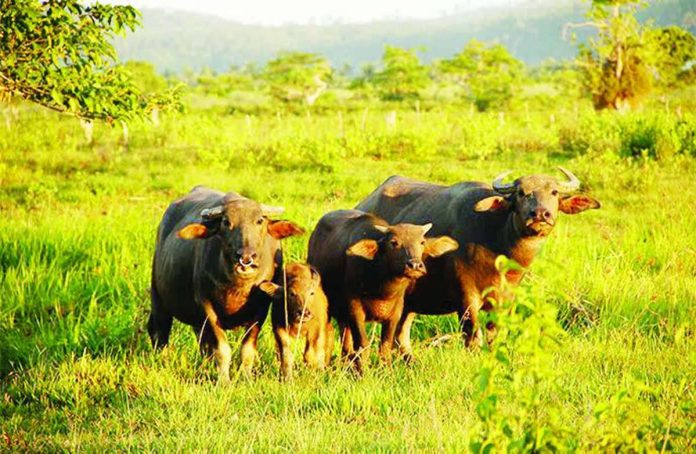
THE PHILIPPINE Carabao Center-National Institute for Animal Sciences (PCC-NIAS) is fast-tracking research to develop heat-tolerant water buffaloes capable of sustaining milk production and reproductive performance amid the threat of an intensifying El Niño.
The Philippine Atmospheric, Geophysical and Astronomical Services Administration (PAGASA) warned in an October 7 advisory that a strong to very strong El Niño is active in the tropical Pacific and is expected to persist through the first half of 2027, bringing dry spells, drought, and severe agricultural challenges. For livestock, extreme heat increases the risk of reduced productivity, reproductive disruptions, and higher mortality rates.
To combat these threats, PCC-NIAS is implementing the second phase of the project titled “Development of Climate-Smart Interventions to Enhance Water Buffalo Production in Heat-Stressed Conditions in the Philippines,” funded by the Department of Agriculture-Biotechnology Program (DA-Biotech).
Dr. Excel Rio Maylem-Abriam, project leader and head of the PCC-NIAS Reproduction and Physiology Section, noted that the initiative integrates thermotolerance — the ability to withstand high temperatures — into the agency’s Genetic Improvement Program (GIP). Researchers are evaluating physical indicators like excessive salivation and fatigue, alongside blood samples, to identify male and female buffaloes with natural heat-resistant traits.
Working alongside Dr. Ester B. Flores, Scientist II and National GIP coordinator, the team discovered that identified thermotolerant buffaloes maintained relatively stable milk yields with minimal declines during high-temperature periods. Prolonged heat exposure typically compromises milk quality, yield, and conception rates.
To address summer breeding challenges, researchers also developed a “summer protocol for reproduction.” Building on timed artificial insemination (AI) technology, the modified protocol incorporates an additional treatment that successfully improved conception rates compared to previous methods.
By combining genetic selection with enhanced reproductive technologies, PCC-NIAS aims to safeguard farmers’ livelihoods, stabilize the local dairy buffalo industry, and ensure a steady milk supply against the backdrop of extreme climate challenges./PN