
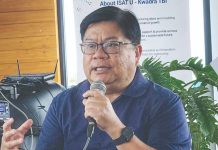


ILOILO City – Iloilo’s business sector is bracing for prolonged economic strain as surging fuel costs ripple through operations, transport, and electricity, with industry leaders warning that micro, small, and medium enterprises (MSMEs) are bearing the heaviest burden amid volatile global oil dynamics.
The Philippine Chamber of Commerce and Industry (PCCI) Iloilo raised the alarm during a Sustainability Summit press conference ahead of the April 28–29 event, underscoring how rising fuel prices are tightening margins and forcing firms to adopt cost-cutting measures to stay afloat.
“The cost of fuel is really high. Although nagnubo na in the past weeks, this situation opened our minds on how fuel supply and pricing affect everything,” PCCI Iloilo president Jerduen Dongor said.
Dongor noted that while oil prices remain beyond the control of businesses, companies are recalibrating operations to cushion the impact of escalating expenses.
“As business practitioners, ang maubra lang gid namon is to adjust — review energy consumption, reduce electricity use, and maximize resources,” he added, citing measures such as limiting air conditioning use and optimizing transport logistics.
Despite slight stabilization in recent weeks, Dongor described the initial phase of the crisis as “traumatic” for many enterprises and warned that uncertainty persists due to shifting global supply conditions.
“We should be cautious and mindful on how we react. Right now, medyo nag-normalize, but we remain cautious kay wala kita kabalo — every day ga-change ang global dynamics,” he said, referring to risks in key oil routes such as the Strait of Hormuz.
PCCI Iloilo program chair Lcid Crescent Fernandez emphasized that the Philippines is among the most vulnerable to fuel price shocks, with cascading effects across industries.
“From a business perspective, it impacts everything — not just operations but electricity, transport, and the cost of goods. When fuel prices increase, everything increases,” Fernandez said.
He stressed that MSMEs are particularly exposed to rising costs.
“The smaller the business, the more you are impacted. For some MSMEs, even a P5,000 increase in cost is already significant — it can mean less income for their families,” he explained.
Fernandez said the crisis should prompt both the private sector and government to reassess economic strategies.
“There should be alarm. Global and national economic factors compound, and we feel the impact locally,” he said.
Meanwhile, Sustainability PH President Dave Jesus Devilles called for a gradual transition toward more resilient and sustainable systems to reduce dependence on volatile fuel markets.
“We are in a transition phase. We cannot just shut down non-renewables, but we must gradually build sustainable alternatives,” Devilles said.
He also highlighted the role of financial institutions in supporting responsible enterprises during periods of economic stress.
“Banks have the responsibility to ensure that financing goes to businesses that are not only profitable but also responsible — those that support communities, pay proper wages, and prioritize local suppliers,” he added.
Devilles underscored the importance of strengthening local economies through community-based enterprises and increased domestic spending to sustain growth amid uncertainty.
The discussions form part of the Sustainability Summit Iloilo 2026, organized by PCCI and Sustainability PH, which aims to align global sustainability frameworks with local action.
The summit will bring together policymakers, industry leaders, and advocates to address challenges in urban planning, digitalization, and circular economy solutions.
Business leaders said such dialogues are critical as Iloilo navigates economic headwinds, with the ongoing fuel crisis highlighting the urgent need for more resilient and adaptive business systems./PN