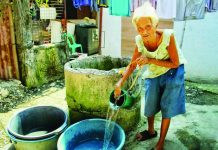




WATER is life. But when the very source of that life becomes a potential carrier of disease, it becomes a threat. And when extracting that water could also contribute to the sinking of the ground beneath our feet, the danger becomes doubly alarming.
Iloilo City authorities disclosed that several shallow wells failed laboratory safety tests despite chlorination. So how many families may have been unknowingly relying on unsafe water?
In densely populated communities where several households share a single well, contaminated water can expose entire families to waterborne diseases. Children, older persons and those with weakened immune systems are particularly vulnerable.
More troubling is that chlorination failed to make the affected wells pass laboratory examinations. Clearly, this problem cannot be solved through disinfection alone. It demands thorough investigation, regular testing and decisive intervention.
The city government is now inventorying shallow wells in 25 barangays vulnerable to the possible effects of El Niño. This is necessary, but an inventory does not protect lives. Action does.
Every communal well must be identified, tested and classified according to its safety. Residents must be informed of the findings, and wells deemed unsafe must be restricted from drinking-water use. Equally important, affected households must have access to alternative water sources. It would be unconscionable to condemn wells while leaving families with nowhere else to obtain safe water. Protecting public health must never become another burden imposed on the poor.
The situation also exposes another problem: inadequate sanitation and urban planning. Shallow wells located near septic tanks are particularly vulnerable to contamination. This is not merely a water issue but a failure to ensure that communities have safe and sustainable basic infrastructure.
Compounding the danger is the looming possibility of a prolonged El Niño. As water supplies become strained, more households could turn to shallow wells, potentially exposing themselves to contaminated water.
But another threat lurks beneath the surface. General Services Office head Engr. Neil Ravena has warned that excessive groundwater extraction could aggravate land subsidence in Iloilo City. For a city already vulnerable to flooding, this warning cannot be dismissed.
Land subsidence, or the gradual sinking of the ground, can damage infrastructure and worsen flood vulnerability. Although its precise relationship with groundwater extraction in Iloilo City requires scientific assessment, the risk demands preventive action.
What good would it do to secure more water today if reckless extraction helped create more serious environmental problems tomorrow?
The city must prioritize sustainable water sources, regulate groundwater extraction based on scientific evidence and strengthen water conservation measures.
The concern is no longer simply whether Iloilo City will have enough water during El Niño. It is whether that water will be safe to drink — and whether obtaining it will compromise the city’s environmental stability.
A progressive city cannot tolerate a situation in which families must choose between thirst and potentially contaminated water. The failed laboratory tests are a warning. The threat of land subsidence is another.
Iloilo City must heed both — before the price of complacency is measured not merely in damaged infrastructure, but in human lives.