


FINANCE Secretary Ralph Recto said the recorded deflation for the bottom 30 percent income households at 0.4 percent in June 2025 reflects the government’s sustained efforts to ease the burden on the most vulnerable and lift more Filipinos out of poverty.
“Magandang balita po ito sa lahat. Ibig sabihin, mabisa ang mga hakbang ng gobyerno para panatilihing mababa at abot-kaya ang presyo ng mga bilihin lalo na para sa mas higit na nangangailangan,” Recto said on July 4.
He added: “Hindi rin po lingid sa ating kaalaman na marami pa rin sa ating mga kababayan ang nagugutom, ayon sa SWS survey. Kaya mas lalo pa naming paiigtingin ang aming mga ginagawa para maiahon ang bawat pamilyang Pilipino sa kahirapan.”
Headline inflation at 1.4 percent in June is well within the government’s 2 to 4 percent target.
Food inflation — a key driver of household spending — significantly slowed to 0.1 percent mainly due to the year-on-year decreases in the prices of vegetables, rice, corn, and sugar; as well as a slower increase in the prices of ready-made food and other food products.
Despite easing inflation, Recto said the government remains watchful of potential price pressures, especially from higher electricity rates, pork prices due to the African Swine Fever (ASF), housing rentals, and inflation in restaurants, cafés, and poultry meat.
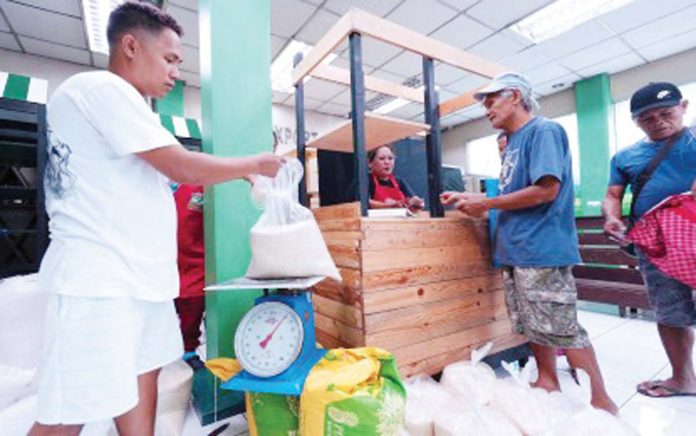
The government is continuously implementing the reduced rice tariff and lowering the maximum suggested retail price (MSRP) on imported rice to P43 per kilo beginning July 16 to ensure that Filipinos continue to enjoy affordable rice.
Through the Department of Agriculture’s “Benteng Bigas, Meron Na!” program, Recto said affordable rice is reaching low-income families and overseas Filipino workers while boosting demand for locally-produced rice and dairy.
The government is also rolling out the P29 per kilo rice through a nationwide partnership between the National Irrigation Administration and local government units, which is sourced directly from local farmer cooperatives to guarantee fair prices for both producers and consumers.
To further protect the interests of local farmers, the National Food Authority is tightening procurement rules for palay (unhusked rice) to ensure greater transparency and accountability.
In case of a fuel price hike due to geopolitical tensions, Recto said the government is ready to roll out fuel subsidy programs for various sectors to ease the burden of those most affected. (PNA)