

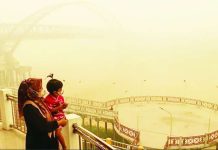

WHEN Tropical Storm “Ramil” brought torrents of rain to northern Iloilo, hundreds of families scrambled to save their belongings, elevate appliances, and flee to safer ground. The usual advice echoed once more: be prepared, keep a go bag, monitor advisories. It is sound guidance, and disaster experts like retired Police Colonel Cornelio Salinas of the Provincial Disaster Risk Reduction and Management Office (PDRRMO) are right to remind the public that readiness begins at home. But as the floodwaters revealed, personal preparedness alone cannot withstand the failures of a system that repeatedly leaves citizens vulnerable.
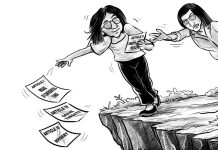
Households can pack their essentials and memorize evacuation routes, but what happens when the water still comes rushing in — not from the sea, but from roads that double as drainage canals, and from floodwaters trapped by poorly designed infrastructure? Preparedness must be shared, and accountability must be shared too. Citizens have a duty to stay alert, but the greater burden rests on the government, whose job is to build resilient communities, not just resilient individuals.
For too long, disaster management in the Philippines has focused on reactive relief rather than preventive planning. Local governments distribute food packs after floods, but neglect to clear waterways before the rainy season. Contractors complete flood control projects, but forget to connect them to existing canals. And agencies overlap, their mandates tangled in bureaucratic floodwaters. The result is a cycle where citizens are told to adapt to disasters instead of expecting their leaders to prevent them.
Preparedness, therefore, must evolve from the household to the hallways of power. It should mean structural accountability — roads designed with proper cross-drainage, flood control projects inspected for quality, and real coordination between the Department of Public Works and Highways (DPWH), the Office of Civil Defense (OCD), and local governments. Citizens can prepare their bags; the government must prepare the ground beneath their feet.
Disaster readiness cannot be a slogan recited every typhoon season. It must be a continuous collaboration where citizens are informed and empowered, and officials are responsible and foresighted. Preparedness begins at home — yes — but it must not end there. The true test of governance lies not in how well people recover after every storm, but in how little they must suffer when the next one arrives.