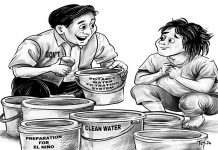




IT HAS BEEN 15 years since the passage of Republic Act 10121 (Philippine Disaster Risk Reduction and Management Act of 2010), the landmark law meant to transform the country’s disaster response from reactive to proactive. On paper, it is a robust framework: it mandates local governments to build capacity, reduce vulnerabilities, and strengthen preparedness. In practice, however, RA 10121 has become one of the most under-enforced laws in the country — a well-intentioned mandate lacking the teeth to compel compliance.
Western Visayas is an example of this gap.
At a recent meeting of the Regional Disaster Risk Reduction and Management Council (RDRRMC), it was revealed that only three local government units (LGUs) in the entire region — Pavia, San Jose de Buenavista, and the Province of Antique — possess the technical training necessary for collapsed-structure search and rescue (CSSR). For a region repeatedly hit by strong typhoons, violent earthquakes, landslides, and structural failures, such a low level of compliance is disappointing and dangerous.
RA 10121 envisioned a nation of empowered LGUs capable of standing as the first line of defense during disasters. But that vision has failed to materialize in many areas because the law hinges on encouragement, not enforcement. Local governments are “mandated” to strengthen DRRM capacities, yet no consequences exist for failing to do so. They are expected to undergo highly technical training, yet timelines are optional, and sanctions are nonexistent. They are urged to purchase rescue equipment, yet accountability for inaction remains murky.
The result? LGUs can sidestep capacity-building obligations for years without facing even a slap on the wrist.
In Western Visayas, some LGUs continue to cite lack of funds or competing priorities to justify the absence of technical training. Yet the Office of Civil Defense (OCD) has repeatedly offered instructors, standardized modules, and even equipment for loan. The tools are available — what is missing is political will. And because RA 10121 does not penalize neglect, failure becomes normalized.
This is the systemic flaw that has rendered the law toothless: a mandate without mechanisms is merely a suggestion.
Disaster preparedness cannot rely on goodwill alone. National oversight must be strengthened to ensure that LGUs do more than convene meetings, submit plans, and buy sirens. Technical competence — like CSSR training — should be non-negotiable. Compliance should be monitored, rated, and enforced. Funding allocations should be tied to actual capacity-building achievements. And RA 10121 may need amendments to introduce penalties or other corrective measures for chronic underperformance.
The tragedies we have witnessed over the years, from collapsed houses to failed evacuations, show that disaster laws without enforcement are as fragile as the structures they aim to protect. Western Visayas cannot continue to depend on a system where preparedness is optional and accountability is vague.
Disaster readiness is not a ceremonial duty. It is a life-saving responsibility — one the law expected LGUs to embrace, but one many have managed to evade.
If RA 10121 is to remain relevant in an era of intensifying climate events and looming seismic threats, it must evolve. It must grow teeth. And it must ensure that local governments cannot simply wait for the next tragedy before acting on what the law required years ago.
Lives depend on it.