



By IME SORNITO, RHENJIE MARIE CANLAS, MARY JOY CAVAÑAS & JENNY ROSE BAYLON
ILOILO City – Should martial law still be taught in schools?
This question sparked a heated debate between two members of the House of Representatives from Iloilo during the recent plenary debate on the 2024 budget of the Commission on Higher Education (CHED).
Rep. Raoul Manuel of the Kabataan party-list said CHED should ensure that martial law is taught in schools, as mandated by law.
Iloilo 1st District’s Rep. Janette Garin, for her part, said martial law is still being taught under the course of reading Philippine history but added, “We cannot dictate on our people to follow the narrative. It is there, it is being taught, it is being said. If they are interested or not then the challenge remains there.”
What is the Ilonggos’ take on this contentious subject?
According to Jethro E. Importado, a public school teacher in this city, if a person wants to know about the beauty of a city, he should also study its history.
“Nangin kabahin na sang aton pagtulun-an ang nahanungod sa martial law, kag ang padayon nga pagtudlo sini sa aton mga ulihing tubo ang magahatag sang pagpapa-athag sa kon ano ang aton ginhalinan, kag kon ano ang aton pwede madangatan sa ulihi,” Importado told Panay News.
He said learning history, such as martial law, shows that people have the courage and capability to reveal what has really happened during the past decades.
Another public school teacher, Araceli Esperidion Aldamar from Alimodian town, agreed that martial law should be included as a subject topic.
“Based on my perspective as a teacher, I will agree if martial law will be part of the subject topic in school because I believe that it is a part of our history,” said Aldamar.
She stressed that it is better if learners will know and be enlightened about what really happened during the time of martial law.
Ma. Luz P. Isiderio, a teacher at the Jalandoni Memorial National High School in the Lapuz district, is in favor of teaching martial law in schools, especially to the new generation.
“Para bal-an sang new generation ang Philippine history, kag para bal-an nila kon ano ang power sang president to declare martial law. So may idea ang kabatan sang aton Constitution,” Isiderio said.
Chrisie Mae Villabeto, a student of Cabalum Western College, said martial law should be taught in schools because it is a part of history and also to give awareness to the younger generation.
“Importante siya (itudlo) para maging aware kita about dira kag kung ano ang effect kag causes ya,” Villabeto said.
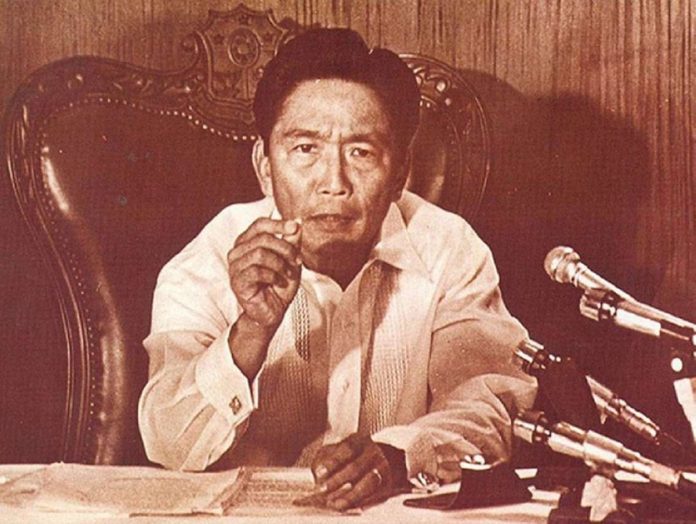
She further clarified that martial law was imposed by then-President Ferdinand Marcos Sr. to protect the Filipinos in the past against communism.
“Tungod kay Marcos (referring to President Ferdinand Marcos Sr.) naging president, damo tawo ga-istorya about dira kay gusto nila ipa-remember kung ano gin-obra sang papa ni Marcos,” Villabeto added.
Another student, Queenie Matillano from Iloilo Science and Technology University (ISAT-U) in La Paz district, echoed the same. She said the present generation should be aware of the happenings and about the people who sacrificed their lives during the martial law.
West Visayas State University students Hazel Manahan and Carla Carlos stated that martial law should be taught in schools in order to know its relevance.
“Relevant man siya guro kay mag-girinuwa na na ang mga opinyon ka mga estudyante (It’s probably relevant since students’ opinions are now diverging). Tapos dira na nila mahambal kung gusto pa nila ipadayun ang pagtudlo sang martial law ukon indi,” Carlos said.
For “Kiko” from the University of San Agustin, he said: “I agree na dapat itudlo ang martial law as part of history subjects in schools, since damo ang nagkalatabu sa panahon ng diktaturyang at rehimeng Marcos. Importante ini nga bahagi ng history nga may daku nga impluwensya sa aton 1987 Constitution na kung diin ginahingabot sini nga makay-o ang mga hindi matarong na gakatabu sa aton nasyon sadto in terms of economy, government policies, at iba pa.”
Teacher Prisbe Ceballos from Pavia town added that including the martial law topic in one of the subjects in high school is okay as long as both sides of the story are presented.
“If I were to ask, I am in favor of discussing martial law in our lesson especially in Araling Panlipunan because it is one of the important parts of our history na hindi natin pwedeng i-set aside dahil kailangang malaman ng mga bagong henerasyon. So it depends naman sa makabagong henerasyon on how they interpret it, as long as it is taught without bias and remains factual, reflecting the true events,” Ceballos said.
She also cited both the positive and negative effects of martial law: “There are positive effects of martial law. There are also adverse effects, especially for the poor who couldn’t defend themselves and for those who weren’t given a chance to explain themselves during that period. There were oppressions, and I have experienced it with my family in Manila because I was born there. Na-witness ko gid ya paano nila gina-drag ang tawo nga ginasuspetsahan.”
Meanwhile, Riza Joy J. Prodigo, a public school teacher from Pavia, told Panay News that teaching martial law is acceptable as long as authors maintain fairness.
“Big yes gid ini ya (A big yes to this) para ma-inform well ang mga estudyante tapos to make them aware kung ano ang nagkalatabu sang una. Kay sa curriculum naton subong it is very congested, bombarded with facts and details, but it doesn’t focus on specific events,” Prodigo said. She added: “However, when I teach martial law, it should be scholarly, presenting fair facts based on historical documents and covering both positive and negative sides of martial law. This approach ensures fairness and helps students understand its complete picture,” Prodigo stressed.
Teacher “Frank” from a private school is also in favor of this. He said that in this way, students will formulate their own conclusions on the subject matter.
“In this world full of vloggers or influencers, our presentation should be based on a reliable context. It should come from reputable historians. But if any information is omitted or presented in favor of one side alone, then I would not support it,” he said.
A Social Science teacher, Sir Frank, also emphasized that in writing textbooks about martial law, both positive and negative effects should be discussed./PN