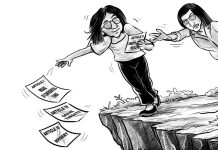




MANY TEACHERS know this moment well. A senior high student stares at a distance–time word problem, not because the math is hard, but because the sentence itself will not open.
The numbers are simple. The formula is on the board. Still, the student freezes, quietly hoping someone else answers so the moment can pass. What feels personal is actually common. EDCOM 2 data shows mastery dropping from 30.5 percent in Grade 3 to just 0.47 percent by Grade 12.
In real terms, this means most senior high students are still struggling with the basics — reading with understanding, basic numeracy, the skills needed to learn anything else.
The situation is less dramatic than it sounds, but more damaging. It is like building a house on a weak foundation and adding floors anyway because the schedule says so. The walls stand, the paint looks fine, but the structure creaks.
Mass promotion has worked this way. Students move up even when the basics are shaky. By Grade 12, only a few meet expected standards. The rest survive — by memorizing, guessing, leaning on classmates, or learning how to pass without fully learning. Now imagine carrying that fragile foundation into college. The pressure only grows heavier, and the gaps harder to hide. That conversation, though, belongs to another column space.
This must be said carefully: Our students are not incapable. The data does not point to laziness. It points to resilience. Many students manage despite crowded classrooms, missing resources, and long commutes. What failed them was not ability, but support and timing. The system often did not slow down when it should have, or intervene early enough. Saying “this child is not ready yet” feels harsh. In the long run, it is an act of care.
Look at the bigger picture. Prosperity does not come from billboards or shiny malls, but from productivity. Productivity comes from people who can read instructions, make sense of information, solve new problems, and learn as tools change. When thinking is shallow, work stays cheap.
This is why the learning crisis is not just an education issue. It is an economic one. Investors hesitate to build advanced industries when the workforce cannot reliably meet technical demands. Innovation becomes rare. Wages remain low. Growth becomes shallow. There may be more consumption, more food parks, more weekend sales, but not enough laboratories, design centers, or high-tech factories.
No country has become high-income while most of its people struggle with Grade 3 skills. Education gaps also have civic consequences, shaping not only how people work, but how they choose leaders and respond to public power.
This also explains a long-standing paradox. Individually, Filipinos shine. Overseas, they are trusted professionals. Locally, many excel despite the odds. Yet as a system, we lag. Success becomes accidental rather than designed. Those who escape through strong families, good private schools, or extraordinary grit thrive. Everyone else carries the weight of gaps they did not create.
Over time, inequality hardens. Social trust weakens. People stop believing that effort leads to reward. Talent leaves. Cynicism grows. Education, in this sense, is not just preparation for work. It quietly shapes how people relate to society itself.
The EDCOM 2 findings make this trajectory visible. Using national assessments from 2023 to 2025, the Commission found that nearly 70 percent of Grade 3 learners are not proficient in foundational literacy and numeracy. By Grade 6, proficiency drops to around 19.56 percent. By Grade 10, it falls to 1.36 percent. By Grade 12, it reaches 0.47 percent (EDCOM 2, 2026).
These are not random dips. They reflect a compounding failure to master basics early. International studies support this pattern. (To be continued)/PN