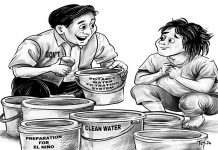




THESE clear guidelines put people first before profits, but with the price of gold, copper and nickel rising continually on world markets, the wealthy Filipinos with political power are opening up the Philippines to more local and foreign investments in extractive mining.
This would be beneficial to the Filipinos if the environment, forests, rivers and streams were not destroyed, cut down or polluted in the process, and if the local communities affected were consulted, and if they approved, and were the primary beneficiaries of the mining projects. However, the profits earned go mostly to the mining companies, their investors, local politicians and to the national government.
If these massive funds earned by mining were used to benefit the people and provide better health services, social housing, fair wage employment and the reduction of poverty, they could be justified.
The earnings from mining products from October 2024 to September 2025 reached approximately $7.90 billion. Of that, $4.07 billion were for metals and $3.83 billion for minerals. The question is where does it all go? Certainly not to the poor.
As of November 2025, approximately 51 percent of Filipino families (estimated 14.3 million) consider themselves “poor.” An additional 12 percent of families consider themselves “borderline” poor, meaning they are on the edge of falling into poverty.
The reduction of poverty is incremental. The government estimates that absolute poverty, and the shame of the rich that causes it, will be eliminated in 14 years. The official national goal is for the Philippines to become a “predominantly middle-class society” by 2040, where “no one is poor.”
This dream of no poor presumes that the economy will grow by at least 6 percent, and while it looks optimistic on paper, it is unlikely in reality, since the national wealth, such as that from mining, flows to the pockets of the rich and not the poor, as we know from the ongoing investigation in to the gigantic corruption in government where, for example, billions of pesos were stolen through a “system of plunder” of the national flood control funds.
The Department of Finance has estimated that there were “ghost” flood control projects that cost the Filipino people about $2 billion, or 60 percent of flood control funds.
For over 15 years, stolen funds amounted to P1.14 trillion ($16.92 billion). The investigators discovered that kickbacks and commissions often reach as high as 25 percent, leaving only 30–40 percent of the original budget for actual construction.
For sure, if anyone is found guilty, they will buy their way out of criminal charges, and the corruption will be repeated. We can hope, but hope alone cannot fill an empty stomach.
So, when it comes to mining, the gigantic funds generated over the years in the sale of gold, copper, nickel and other minerals will likely be stolen or only benefit the rich, and leave communities with nothing but destroyed lands, rivers, forests and fields.
So, let us not fool ourselves into believing that extractive open-pit mining is for the benefit of the Filipino people, it is not, and never will be if history is a lesson./PN