


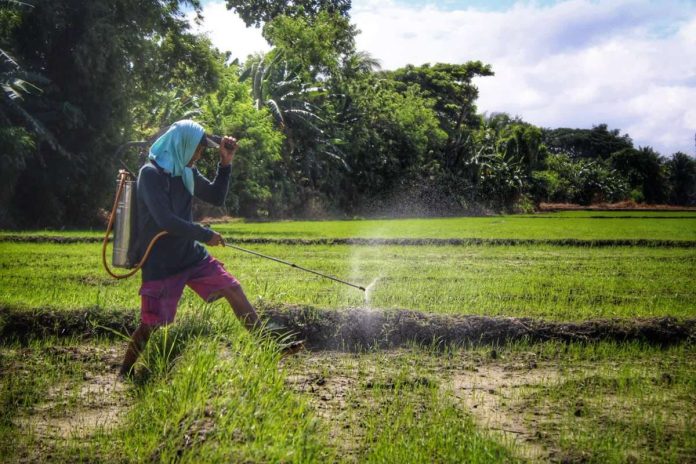
ILOILO City — Western Visayas faces a growing threat to food security.
The intensifying El Niño phenomenon sears rice and corn farms, driving agricultural losses to P465.7 million and leaving thousands of farmers and fisherfolk struggling with the effects of prolonged drought.
The Office of Civil Defense (OCD) Region 6 warned of mounting pressure on the region’s agricultural sector as the dry spell continues, with the phenomenon expected to persist through the first half of 2027.
Director Raul Fernandez reported that 7,760 farmers and fisherfolk had been affected as of October 27, while the number of affected families reached 4,559, representing 22,795 individuals across Western Visayas.
Capiz suffered the heaviest agricultural damage at P307 million, accounting for nearly 66 percent of the regional losses, followed by Iloilo with P155 million, or approximately 33 percent.
Together, the two provinces accounted for more than 99 percent of the recorded agricultural damage, underscoring the severity of the drought’s impact on two of the region’s major agricultural producers.
Compounding the crisis is the absence of a finalized consolidated budget specifically for El Niño mitigation.
Fernandez acknowledged that government agencies are relying on existing funds and available allocations to finance emergency interventions and assist affected communities.
The government’s response covers five critical sectors — food security, water security, health security, energy security and public safety.
OCD-6 has scheduled a follow-up coordination meeting on November 20 to identify resource gaps, assess additional interventions and strengthen the region’s disaster response.
Meanwhile, Fernandez called for urgent water conservation as several areas grapple with severe water supply shortages.
“Conserve water. Kung may mga sira na tayong linya ng tubig, kailangan na i-repair ‘yan. Kailangan talaga nating mag tipid sa pag gamit ng tubig,” Fernandez said.
“Apply natin ‘yung pag-reuse, hindi ‘yung basta-basta na lang ang pag gamit natin ng tubig. We can also regulate sa mga car wash station natin. Kadalasan, gumagamit ng maraming tubig,” he added.
He urged households and businesses to repair leaking water lines, reuse water whenever possible and minimize unnecessary consumption, particularly in water-intensive establishments such as car wash stations.
According to the Philippine Atmospheric, Geophysical and Astronomical Services Administration, a very strong El Niño is expected to peak toward the end of 2026 and persist through the first half of 2027./PN