



A reflection after the storm
(By Kayla Lois D. Yumang)
Another storm, another disaster, another headline.
Once again, the Philippines is battered – homes washed away, roads cut off, families holding on to rooftops, and lives changed overnight. And yet again, the world will look at us and say, “Filipinos are resilient.”
Yes, we are. But maybe it’s time we ask ourselves: until when?
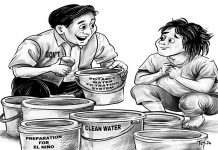
Because every time we rise from the flood, we are also forced to wade through a system that sinks us deeper – the same slow response, the same unfulfilled promises, the same politicians who only appear when the cameras roll. When the floodwaters recede, so does their concern. The cycle has become political, not natural.
Our disasters reveal not only the strength of our people but the weakness of our leaders.
In times like these, relief goods become tools for image-building. Calamity becomes a campaign. And while people line up for food packs, others are already lining up for future votes. It’s a cruel exchange, sympathy for silence.
To the most affected areas – may you “kumbati” more than ever, but may your courage also turn into “conviction.” Don’t let your pain be used for pity points. Don’t let promises of “ayuda” erase the reality that you deserve more than temporary relief – you deserve protection, planning, and honest governance. These storms may be natural, but the scale of destruction isn’t. We cannot keep calling them “acts of God” when they are often acts of neglect – of ignoring climate change data, of approving projects that destroy forests and waterways, of choosing short-term profit over long-term safety.
For years, experts have warned about poor drainage systems, illegal logging, and the lack of disaster planning in flood-prone areas. But every administration prefers a photo opportunity over a long-term solution. The truth is, the Philippines isn’t just vulnerable due to its geography – it’s vulnerable because of its governance.
When a typhoon hits, we see the same pattern: unpreparedness, finger-pointing, then promises. Rinse, repeat. Until the next calamity comes, when one goes to an evacuation center, and you’ll see the stories behind the statistics – mothers fanning their children with pieces of cardboard, students clutching wet notebooks, old men staring at what used to be their homes. These people are not asking for pity; they are asking for a fair chance to rebuild without fear of being forgotten again.
They are the faces that never make it to the press briefings, the ones left behind after the cameras leave. They are the reason this conversation matters. Because every storm we survive shouldn’t just remind us of our resilience – it should remind us of what’s wrong and what needs to change.
Resilience is not a substitute for justice. It should not be the standard for survival. We deserve leaders who act before the storm, not just after. We deserve systems that protect, not politics that exploit. We deserve change that doesn’t only arrive when there’s coverage.
Change begins when memory turns into movement – when we stop forgetting, when we start questioning, and when we refuse to settle for “that’s just how it is.” The danger isn’t in the storm itself; it’s in forgetting what caused the damage after the skies clear.
So, when election season comes, remember the faces of those who lost everything. Remember who showed up only when the cameras rolled. Remember the leaders who called for “resilience” instead of reform.
Because we are not just a resilient people. We are a people who remember.
And in the next elections, we will choose leaders who will make sure resilience is no longer our only story.
We can rebuild – yes. But we shouldn’t have to start from zero every single time.
***
Woman Talk with Belinda Sales is taking a wellness break. Email me at belindabelsales@gmail.com for your thoughts. Follow us on X at @ShilohRuthie./PN