



ILOILO City — Western Visayas faces the threat of an economic slowdown as inflation surged to 9.2 percent in September, prompting a top government economic official to warn that the region must urgently strengthen agricultural production, expand manufacturing and secure affordable electricity to sustain its growth.
Department of Economy, Planning, and Development (DepDev) Undersecretary Carlos Bernardo O. Abad Santos said the region’s economic outlook has become increasingly challenging despite emerging as the country’s fastest-growing regional economy in 2025.
Western Visayas recorded a 6.4 percent economic expansion last year, the highest among the country’s 18 regions, accelerating from 4.4 percent in 2024.
However, Santos warned that rising inflation and structural weaknesses could undermine these gains unless the region takes decisive measures to strengthen its economic foundations.
“In 2026, we have a different situation because you had an inflation rate of only 1.5 percent in 2025, and now [2026] it was 9.2 percent in September. So, again, the landscape has drastically changed,” Santos told Panay News during the Philippine Economic and Investment Briefing in Iloilo City on November 6.
Although DepDev expects the regional economy to continue expanding in 2026, Santos cautioned that growth could fall below last year’s performance.
“So, again, what is even now, is again to ensure we don’t slide back in terms of our growth. So, for Western Visayas again, we’re still projecting a positive growth rate but potential that probably not as much as what we experienced in 2025,” Santos stressed.
The region’s gross regional domestic expenditure reached P683.44 billion in 2025, up from P642.47 billion in 2024 at constant 2018 prices, reflecting gains in agriculture, industry and services.
But sustaining that momentum requires addressing weaknesses that could limit the region’s capacity to generate higher-value economic activities.
AGRICULTURE, MANUFACTURING
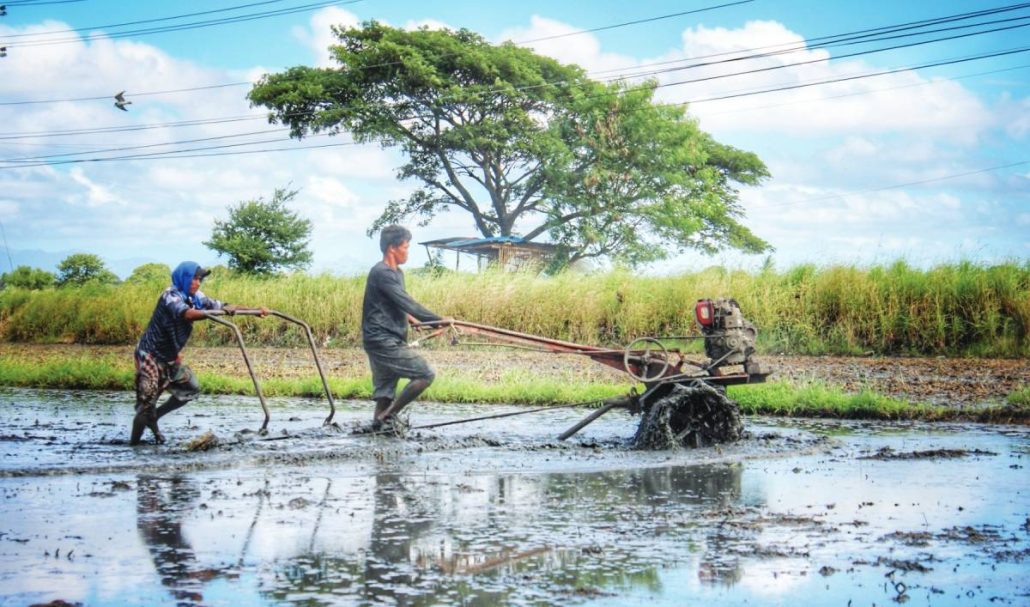
Santos identified agriculture as a critical sector requiring sustained support, noting that Western Visayas depends more heavily on agricultural production than the national economy as a whole.
“Now, what are the sectors or the industries that we need to enhance? Number one is to sustain your agricultural production because, compared to the national average, Western Visayas has a larger share of agriculture in the economy,” Santos said.
He emphasized, however, that agricultural productivity alone would not be enough to secure stronger economic growth.
A major weakness, he pointed out, is the region’s continued dependence on selling raw agricultural commodities instead of processing them into higher-value products.
“So, you need to sustain that production base. However, what is currently lacking in Western Visayas is value addition. Most of your raw materials are shipped out of the region in raw form, so what we need is to step up value addition through manufacturing and processing,” Santos explained.
Expanding agro-industrial processing would allow Western Visayas to capture more economic value from its agricultural resources instead of relying primarily on raw commodity production.
POWER SUPPLY CRITICAL
Santos also warned that inadequate and costly electricity could become a major obstacle to industrial expansion.
He stressed that manufacturing and agricultural processing require dependable electricity at competitive rates, making power infrastructure a crucial factor in the region’s economic prospects.
“When you do manufacturing and processing, you need electricity power,” Santos stressed.
“One important task between 2026 and 2027 is to ensure that we have adequate, reliable, and affordable power,” Santos added.
He said the Regional Development Council (RDC) and provincial governors across Western Visayas recognize the problem and are working to address energy constraints and reduce electricity costs.
“So again, the Regional Development Council and your provincial governors are well aware of this constraint, and they are doing all they can to cushion it in terms of power. So, these two are very important: we have to ramp up value addition, and we need to lower the cost of anticipated power,” he stressed./PN